The Odorous House Ant (Sugar Ant) In Olympia: FAQ
Sugar ant control in Olympia More commonly known as “sugar ants,” odorous house ants are…
Jenny TuckerMarch 18, 2024

Termite season is the time of year when termite colonies send out winged termites, called swarmers, to start new colonies. In western Washington, that often happens in the fall, right after the first good rains.
That surprises many people, because most national articles say termite season is in the spring. So if you spot winged bugs near a window in Olympia or Lacey this September or October, take a closer look.
At Bigfoot Pest Management, we help South Sound homeowners sort out what they are seeing. Below, we cover when termites swarm here, how to tell them from flying ants, the warning signs to watch for, and what to do next.
Termite season is the swarming season, not the only time termites are active. Termites feed on wood all year long. They slow down in cold weather, but the colony keeps working underground or inside wood.
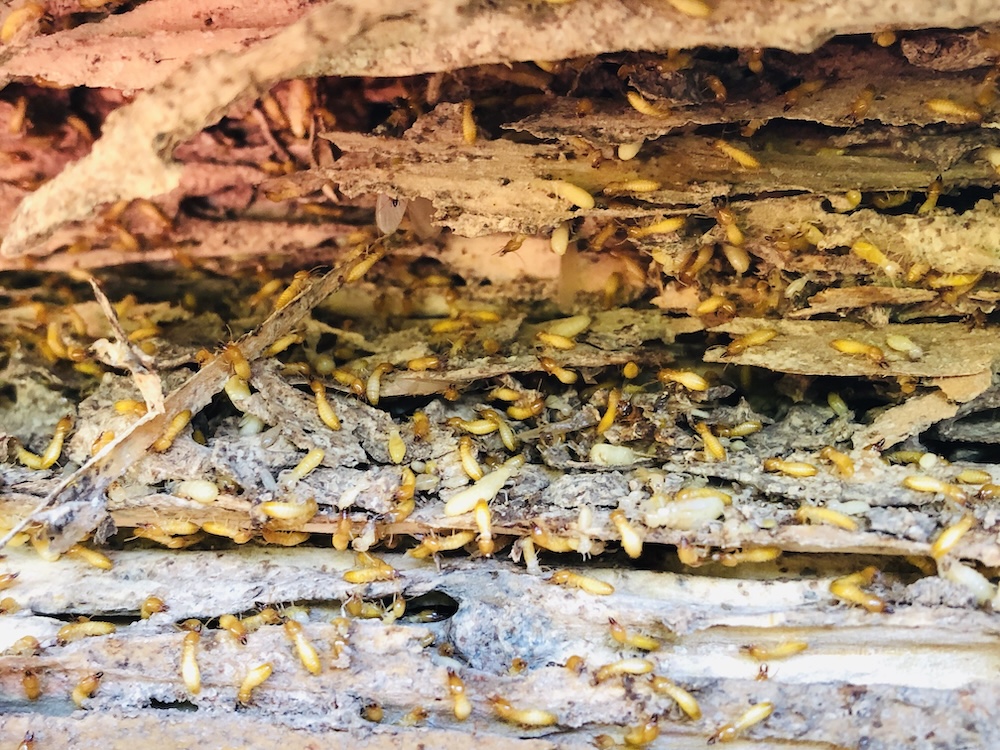
Once a colony is big and mature, it produces winged termites. Scientists call them alates or reproductives. On the right day, hundreds of them leave the nest at once. They pair up, drop their wings, and try to start a new colony in moist soil or wood.
Most swarmers die within hours. A swarm, though, is a sign that a mature colony is nearby. If the swarm happens inside your home, the colony may be in or under your house.
In Thurston County, termites swarm mostly in the fall, with some swarms in the spring. Two kinds of termites cause most swarms here.
Western subterranean termites (Reticulitermes hesperus) live in the soil and build tunnels up into wood.
According to a Pacific Northwest Extension guide from Oregon State University, they swarm mainly in the fall west of the Cascades and mainly in the spring east of the Cascades.
They swarm in the afternoon, often on a warm, sunny day right after a rain. The swarmers are small and dark brown to black, about 3/8 inch long with their wings.
Pacific dampwood termites (Zootermopsis angusticollis) live in wet, rotting wood. They fly on warm evenings in late summer and fall, often after rain.
They are much larger than subterranean swarmers, often more than an inch long with wings, and range from cream-colored to dark brown. Like many swarming insects, they may flutter around outdoor lights.
| Termite | Main swarm season in western WA | Time of day | What swarmers look like | Damage risk |
|---|---|---|---|---|
| Western subterranean | Fall (sometimes spring) | Afternoon, after rain | Small, dark, about 3/8 inch | High over time |
| Pacific dampwood | Late summer to fall | Warm evenings | Large, over 1 inch, cream to dark brown | Starts in wet wood; can spread as the colony grows |
A single swarm lasts less than an hour. The swarming season, though, can stretch over several weeks. In Thurston County, the fall season usually follows the first rains of September and October.
Spring swarms may show up on warm days after spring showers.
After swarm season ends, the colony is still there. That is why one quiet month does not mean the problem is gone.
Flying ants and termite swarmers often show up at the same time of year, so they are easy to mix up. Here is how to tell them apart.
| Feature | Termite swarmer | Flying ant |
|---|---|---|
| Antennae | Straight, like a string of beads | Bent at an elbow |
| Waist | Thick, no pinch | Thin, pinched waist |
| Wings | Four wings, all the same size | Front wings longer than back wings |
| Wings after landing | Break off easily and pile up | Usually stay on |
Here in Washington, carpenter ants are the winged ant people most often confuse with termites. Knowing what carpenter ants look like in Washington homes makes the difference easier to spot, since their pinched waist and bent antennae stand out up close.
Their damage looks different too: carpenter ant damage is clean and smooth, while termite damage is packed with soil. A few other bugs that look like flying termites also show up in fall, so a close look is worth the time.
Swarmers are the most visible sign of termites, but they are not the only one.
Watch for these warning signs in and around your home:
Early termite wood damage is easy to miss because it often starts inside the wood, behind paint or trim that looks fine from the outside.
Termites are less common here than in the South, but they are here. You may read online about drywood termites, which leave piles of dry pellets called frass, or Formosan termites.
Those are mainly southern and California pests. In Thurston County, subterranean and dampwood termites are the ones to watch.
Washington State University included the Olympia area in its termite mapping project. Our wet climate and building styles give termites what they need.
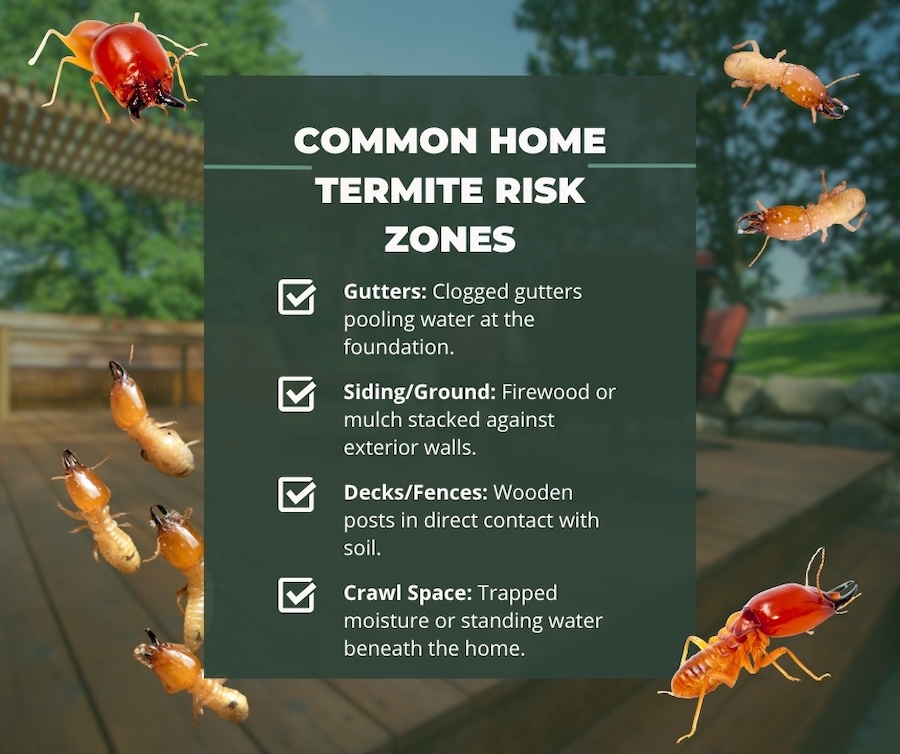
Common risk factors in South Sound homes include:
Moisture is the common thread. Wet wood draws dampwood termites, which can move into sound wood as their colony grows. The same moisture problems invite ants and other pests, so fixing a leak or a damp crawl space protects your home in more than one way.
Seeing a swarm is stressful, but you have time to act. Termites do not destroy a house overnight.
Follow these steps:
If you are buying or selling a home, termites may come up during the sale.
Under Washington’s wood-destroying organism (WDO) inspection rules, any WDO inspection done for a sale, exchange, or refinance has to be a complete inspection by a licensed inspector.
When is termite season?
Termite season is when termites swarm. Across much of the U.S., that is spring. In western Washington, western subterranean termites swarm mostly in the fall, and Pacific dampwood termites swarm in late summer and fall.
When do termites swarm in Washington?
West of the Cascades, including Thurston County, most swarms happen in the fall after the first rains. East of the Cascades, subterranean termites swarm mainly in the spring.
How long does termite season last?
Each swarm lasts less than an hour. The season can run for several weeks, depending on rain and temperature. The colony stays active all year.
Are termites attracted to light?
Yes, swarmers often fly toward light. Dampwood swarmers fly on warm fall evenings and may gather near outdoor lights. Indoor swarmers often end up on windowsills because they are drawn to daylight.
What do flying termites look like?
Flying termites have straight antennae, a thick waist, and four wings that are all the same length. Western subterranean swarmers are small and dark. Dampwood swarmers are much larger, often over an inch long with wings.
Are swarming termites dangerous?
Swarming termites do not bite, sting, or spread disease. They are not a danger to people or pets. The real risk is the colony they came from, which may be feeding on wood in your home.
Does seeing termite swarmers mean I have termites?
Not always, but it is a warning sign. Swarmers outside may come from a stump or old fence. Swarmers inside your home mean you should get an inspection soon.
Some termite signs call for a professional right away. Reach out when:
Termite colonies are hidden in soil and wood, so DIY sprays rarely reach them. A trained technician knows where to look and what the signs mean. Bigfoot Pest Management is a locally owned, family-run company serving Olympia, Lacey, Tumwater, Yelm, and the South Sound. We are licensed by the Washington State Department of Agriculture (License #84786).
Our team will look for termites, find the moisture and wood-to-soil problems that draw them in, and explain your options clearly. Ongoing pest prevention plans help keep your home protected all year.
Termite season in Thurston County looks different from what you may read online.
If you have seen winged bugs this fall and want to know what they are, we are here to help. Contact Bigfoot Pest Management to schedule an inspection with your local Olympia pest control team.