How Do Rats Get in Your House?
Wondering how do rats get in your house? They slip through small exterior holes as…
ElliottAugust 28, 2026

Rodent damage is the destruction rats and mice cause when they chew, nest, and burrow inside your home, including gnawed electrical wires, shredded insulation, contaminated food, and droppings that carry disease.
At Bigfoot Pest Management, we see it year-round in Olympia homes because our mild, wet climate gives rodents a cozy place to hide in crawl spaces, walls, and attics.
The tricky part is that most of the damage happens where you can’t see it. This guide walks you through what rodent damage looks like, how to tell mice from rats, which rodents are common around the South Sound, and how to keep them out for good.
Rodents cause far more than a few chewed food boxes. Their constantly growing teeth force them to gnaw nonstop, and that habit puts your wiring, insulation, structure, and health at risk.
Chewed wiring is the most dangerous rodent damage in any home. Rats and mice strip the insulation off electrical cables to wear down their teeth and gather nesting material, which leaves bare wires exposed inside your walls and attic. Those exposed wires can spark and start a fire you never see coming.
The National Fire Protection Association has linked rodents to thousands of house fires each year. Warning signs include flickering lights, a breaker that trips for no clear reason, or a faint burnt-plastic smell near outlets.
Rodents tear apart attic and crawl-space insulation to build nests, and that wrecks its ability to keep your home warm. Shredded fiberglass, matted batting, and hollowed-out tunnels through insulation are all signs of an active nest.
Once rodents move in, they also soak insulation with urine and droppings, which means it usually has to be removed and replaced rather than cleaned.
Rodents contaminate every surface they travel across. They leave droppings and urine on counters, in pantries, and inside cabinets, and they chew through food packaging to get at what’s inside.
This isn’t just gross; it’s a real health issue, which we cover in the diseases section below.
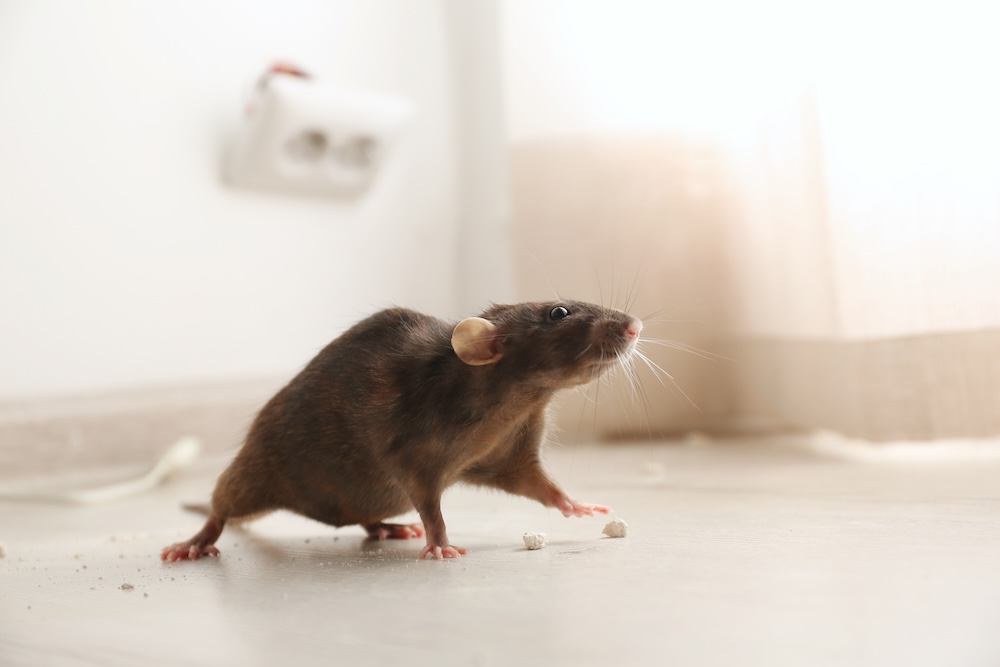
You can identify rodent damage by looking for a combination of droppings, gnaw marks, greasy rub trails, nesting material, and nighttime noises. Rodents are nocturnal and secretive, so you’ll usually spot the evidence long before you see the animal.
Watch for these common signs of a rodent infestation:
– Droppings: near food, under sinks, along baseboards, or in drawers and cabinets.
– Gnaw marks: on wood, drywall, wiring, and plastic or cardboard food containers.
– Grease marks: dark smudges along walls and baseboards where rodents rub their oily fur as they travel the same paths.
– Nesting material: like shredded paper, fabric, or insulation tucked into hidden corners.
-Scratching or scurrying sounds: in walls, ceilings, or the attic, especially after dark.
-A musky, ammonia-like smell: in enclosed spaces from urine buildup.
Fresh droppings are dark and soft; older ones turn gray and crumble. A mix of sizes usually means both adults and young are present, which points to a growing population.
Droppings are the fastest way to tell which rodent you have. Mouse droppings are small (about 1/8 to 1/4 inch) with pointed ends, roughly the size of a grain of rice.
Rat droppings are larger, around 1/2 to 3/4 inch, and shaped more like a raisin. Norway rat droppings have blunt ends, while roof rat droppings are more pointed. Rats also leave heavier gnaw damage and more obvious grease trails than mice.
Three rodents cause almost all the home damage we see around Olympia, Lacey, Tumwater, and greater Thurston County: house mice, Norway rats, and roof rats.
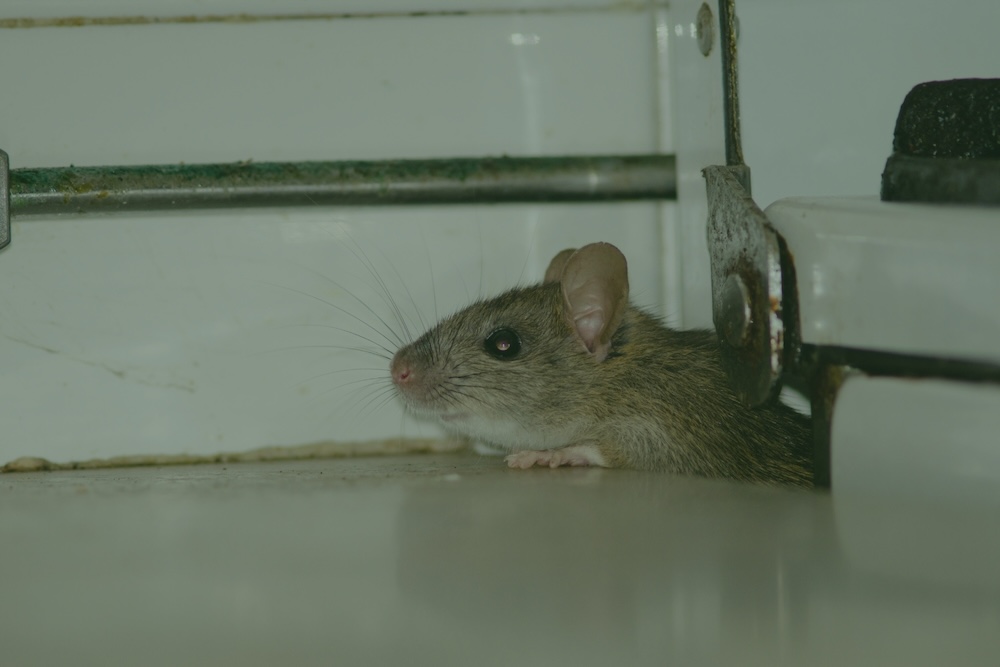
– House mice are the most common. They’re small enough to slip through a gap the size of a dime, breed fast, and tend to nest inside walls and ceilings.
-Norway rats (also called brown or sewer rats) are larger and stronger. They burrow low; think crawl spaces, foundations, and beneath decks — and do heavy structural gnawing.
-Roof rats are agile climbers that favor attics, rafters, and upper levels. In the Pacific Northwest’s tree-heavy neighborhoods, they’ll use overhanging branches and utility lines as highways onto your roof.
Our damp South Sound winters push all three indoors looking for warmth and shelter, which is why rodent pressure here doesn’t really have an off-season.
The best way to prevent rodent damage is to make your home hard to enter and unrewarding to stay in.
A few consistent habits go a long way:
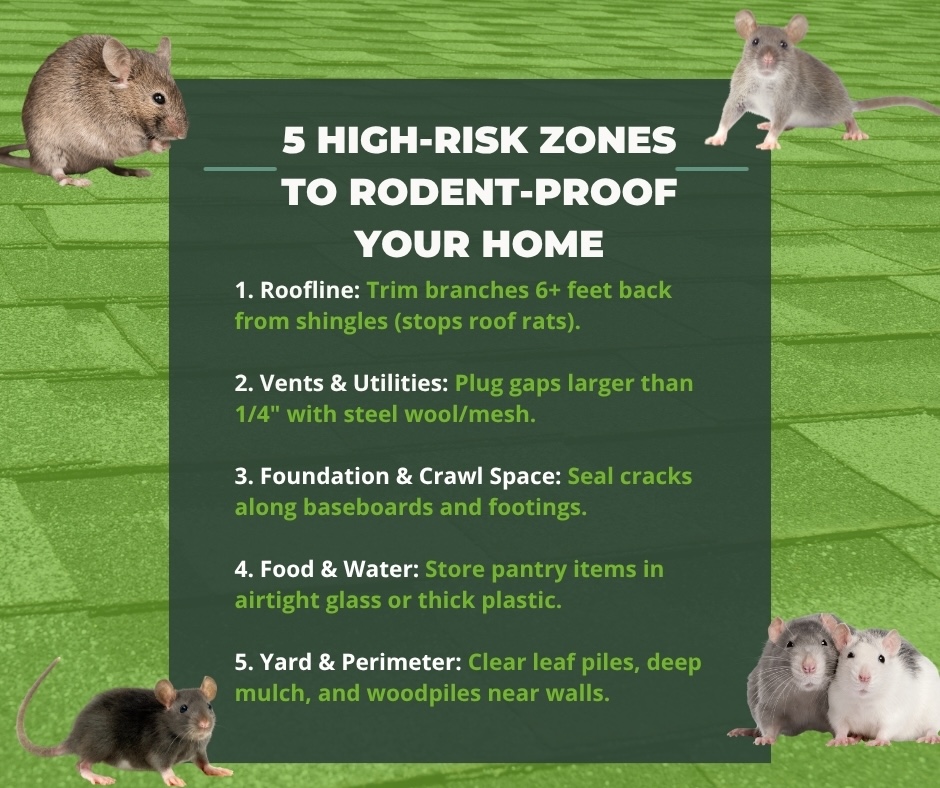
1. Seal entry points. Inspect the outside of your home for gaps around vents, pipes, doors, windows, and the foundation. Plug small holes with steel wool and seal larger gaps — mice only need about a quarter-inch.
2. Cut off food and water. Store pantry items and pet food in sealed containers, clean up crumbs, and fix leaks and standing water.
3. Reduce shelter outside. Clear leaf piles, deep mulch, and yard debris, and trim tree branches back from the roofline so roof rats lose their bridge.
4. Protect vulnerable wiring. In garages, basements, and attics, run exposed cables through metal or PVC conduit where you can.
5. Inspect regularly. Check attics, crawl spaces, and basements a couple of times a year for fresh droppings, chewing, or nesting.
The EPA recommends sealing openings and removing outdoor nesting sites as the foundation of long-term prevention.
A professional inspection finds the rodent damage and entry points you can’t, and stops the problem at its source instead of chasing symptoms. DIY traps can knock down a rodent or two, but they rarely solve an active infestation, and they do nothing about the hidden damage already done.
Here’s what professional rodent service adds:
– A full inspection of attics, crawl spaces, walls, and the exterior to map where rodents are getting in and where they’ve nested.
– Exclusion: sealing every entry point so the problem doesn’t just come back next season.
– Targeted removal: based on the species and the size of the infestation, not guesswork.
– Damage assessment: so you know whether chewed wiring needs an electrician or contaminated insulation needs replacing.
– Ongoing monitoring to catch new activity early.
At Bigfoot Pest Management, our team is certified by the Washington State Pest Management Association, and with more than a decade of experience in the Olympia area, we build customized rodent control plans around your specific property instead of a one-size-fits-all trap-and-go.
What does rodent damage look like?
Rodent damage shows up as gnawed wires and wood, shredded or hollowed-out insulation, chewed food packaging, droppings and grease trails along walls, and holes chewed through drywall or flooring. Because much of it happens inside walls and attics, you’ll often notice indirect signs (flickering lights, noises at night, or a musky smell) before you see the physical damage.
Can rodents cause electrical fires?
Yes. When rodents chew through the insulation around electrical wiring, the exposed wires can short, arc, and ignite a fire inside a wall or attic where it can spread before anyone notices. This is why chewed wiring should be treated as urgent and checked by both a pest professional and a licensed electrician.
Do mice and rats carry diseases?
Yes. Rodents can spread illnesses to people through their droppings, urine, saliva, and the parasites they carry. According to the CDC, rodents are linked to a number of diseases, including hantavirus, which can spread when contaminated dust from droppings or nesting material is stirred up. That’s why cleanup and removal are best handled carefully, and often professionally.
How do I know if I have mice or rats?
Compare the droppings and the damage. Small, rice-sized droppings with pointed ends and light, quick scratching in the walls usually mean mice. Larger, raisin-sized droppings, heavy gnaw marks, and grease trails point to rats. Mice tend to spread quietly and fast, while rats are noisier and cause more obvious structural damage. If you’re seeing signs in more than one area, the problem is likely active and worth a professional inspection.
Does homeowners insurance cover rodent damage?
Usually not. Most homeowners policies treat rodent infestations as a preventable maintenance issue, so the cost of removing and replacing contaminated insulation typically falls on you. Some policies may cover certain secondary damage, like a fire caused by chewed wiring, but coverage varies; check your specific policy. This is a big reason prevention and early detection pay off.
Call a professional the moment you see chewed wiring, find droppings in more than one area, keep hearing activity after setting traps, or notice signs across multiple rooms.
Those all point to an established infestation that DIY methods won’t fully clear. Gnawed electrical wiring in particular should never wait, given the fire risk.
Bigfoot Pest Management serves homeowners and businesses throughout Olympia, Lacey, Tumwater, and Thurston County with free inspections and a warranty-backed approach.
As a local, family-owned team, we know the South Sound’s pest pressures because we live here too, and we’d rather help you catch rodent damage early than clean up after it.
Rodent damage is expensive, dangerous, and mostly hidden — but it’s also preventable when you know what to watch for.
– Learn the signs: droppings, gnaw marks, grease trails, nesting, and nighttime noises.
– Prevent it: seal entry points, cut off food and shelter, and inspect a few times a year.
– Act fast on chewed wiring and multi-area activity: those need a pro.
If you suspect rodents in your home, schedule a free rodent inspection with Bigfoot Pest Management and let a local, certified team stop the damage before it grows.