

Preparing for Spiders in Washington State This Spring and Summer



Spring in Washington state means longer days, warmer nights, and more bugs. And where bugs go, spiders follow. If you live in the Olympia area, you have probably already noticed a few more webs showing up around your porch, garage, or garden beds as the weather shifts.
Spiders in Washington state become much more active during the spring and summer months. The warmer temperatures bring out the insects they feed on, and that draws spiders closer to your home. Some species are completely harmless. Others, like the black widow and yellow sac spider, deserve more caution.
This guide covers which spiders you are most likely to see this season, where they tend to show up around your home, and what you can do now to keep them from becoming a problem. Whether you are dealing with a few cobwebs in the garage or finding spiders inside more often than you would like, this post will help you understand what is going on and what to do about it.
Why Spring and Summer Bring More Spiders to Your Home
Spider activity in Washington state follows the insect cycle. As temperatures rise in March and April, insects hatch and become more active. That creates a larger food supply for spiders, which respond by coming out of hiding, building more webs, and expanding their territory.
In the South Puget Sound area, this pattern is especially noticeable. Olympia, Lacey, and Tumwater sit in a mild, moisture-rich climate surrounded by forest cover. That combination supports high insect populations, which in turn supports a healthy spider population. You will often see the first uptick in spider activity around late March, with numbers climbing steadily through June and peaking in August and September.
During spring, many spiders that overwintered in sheltered spots like crawl spaces, woodpiles, and under siding start moving around again. By summer, juveniles from spring egg sacs are growing and looking for food. That is why you may notice both more webs outside and more spiders making their way indoors as the season progresses.
Common Spiders in Washington State You Will See This Season
Washington is home to nearly 1,000 documented spider species. Most are small, harmless, and rarely noticed. But a handful of species are the ones you are most likely to run into at your Olympia-area home this spring and summer.
Giant House Spider
The giant house spider is one of the most recognized spiders in the Pacific Northwest. These spiders can have a leg span of up to four inches, and they move fast. That combination makes them startling to spot on a basement wall or scurrying across a garage floor.
Despite their size, giant house spiders are not dangerous. They are not aggressive, and their bite is not medically significant. They actually help control other household pests like carpet beetles and flies. You will see them most often in late summer when males mature and wander in search of mates, but they can show up indoors any time from spring onward.
Common House Spider
Smaller and less dramatic than the giant house spider, common house spiders are found throughout Washington homes year-round. They are typically brown or gray with darker markings along their bodies. You will find their messy, tangled webs in corners, behind furniture, in garages, and around windows.
These spiders are harmless nuisance pests. Their webs are usually more bothersome than the spiders themselves.
Wolf Spider
Wolf spiders are ground hunters. They do not build webs. Instead, they actively chase down prey in gardens, woodpiles, and grassy areas. During summer, they sometimes enter homes seeking cooler spots and dark hiding places.
Wolf spiders can look intimidating because of their stocky bodies and quick movements. Their bites can cause mild pain and redness, similar to a bee sting, but they are not considered dangerous. You may spot them in basements, closets, or along baseboards.
Yellow Sac Spider
Yellow sac spiders are one of only two medically significant spiders in Washington state. They are small, about a quarter to half an inch long, and can be pale yellow, white, or greenish. During spring and summer, they live primarily in gardens and outdoor vegetation. As temperatures cool in the fall, they often migrate indoors.
These spiders are active nighttime hunters. They do not build traditional webs but create small silk sacs where they hide during the day. Bites are uncommon but painful, causing redness, a burning sensation, and sometimes slow-healing sores. They are found in eastern Washington and in parts of the greater Seattle and Puget Sound area.
Black Widow Spider
The western black widow is the other medically significant spider in Washington. Adult females are shiny black with the well-known red hourglass marking on the underside of their abdomen. Their venom is potent, and a bite can cause serious symptoms, including nausea, muscle pain, and difficulty breathing.
Black widows prefer dark, undisturbed areas like woodpiles, sheds, water meter boxes, and under eaves. They are more common in eastern Washington. A few small populations exist in western Washington, but encountering one near Olympia is extremely unlikely. Still, it is worth knowing what they look like, especially if you spend time around firewood or storage areas.
Cellar Spider (Daddy Long Legs)
Cellar spiders are the thin, long-legged spiders you often see in basements, garages, and bathrooms. They build loose, messy webs in corners and along ceilings. Despite the popular myth, they are not venomous to humans and pose no threat at all.
They are actually beneficial because they eat other small insects and even other spiders. If you are seeing a lot of cellar spiders, it usually means there is a good supply of small bugs nearby, which is worth addressing.
Quick Comparison of Common Washington Spiders
Spider |
Size |
Where Found |
Builds Webs? |
Dangerous? |
Peak Season |
|
Giant House Spider |
Up to 4″ span |
Basements, |
Yes |
No |
Late summer/fall |
|
Common House Spider |
Small |
Corners, |
Yes |
No |
Year-round |
|
Wolf Spider |
Medium-large |
Ground level, |
No |
No |
Summer |
|
Yellow Sac Spider |
1/4″ to 1/2″ |
Gardens, |
No |
Yes |
Spring/summer |
|
Black Widow |
1/2″ body |
Woodpiles, |
Yes |
Yes |
Summer/fall |
|
Cellar Spider |
Small body, |
Basements, |
Yes |
No |
Year-round |
Where Spiders Hide Around Your Olympia Home
Spiders are drawn to places that give them shelter, moisture, and access to prey. In the Olympia area, our climate creates ideal conditions in and around homes. Here are the spots where spiders tend to set up during the warmer months.
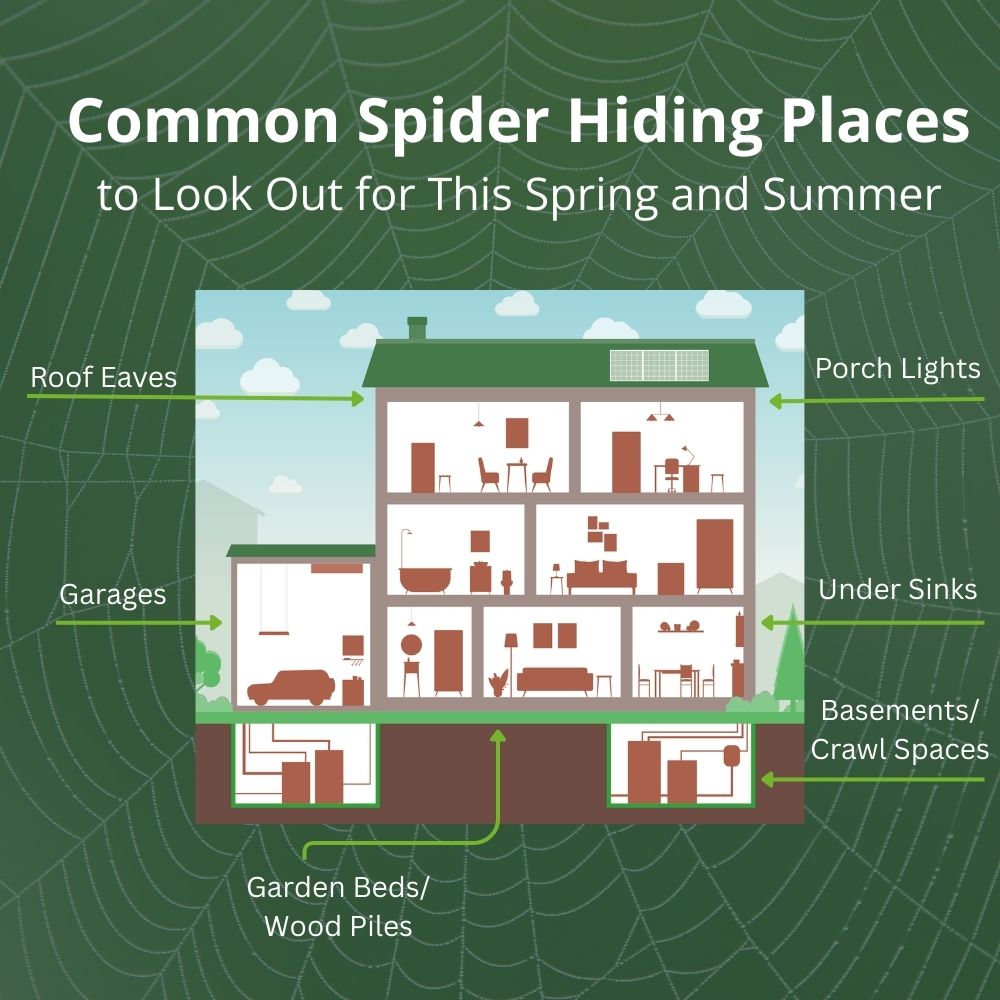
- Outside your home: Check around porch lights (which attract bugs), garden beds, under eaves, near woodpiles, around hose bibs, and along fence lines. Shrubs and bushes that touch or hang close to your siding create easy bridges for spiders to get to your walls and eventually inside.
- Inside your home: Garages, basements, crawl spaces, and attics are the most common indoor hiding spots. You may also find spiders in closets, behind stored boxes, under sinks, and around window frames. Bathrooms and laundry rooms attract moisture-loving species.
- Less obvious spots: Shoes left in the garage. Gardening gloves. Firewood stacked against the house. Kids’ outdoor toys that sit in one place for a while. These are the kinds of spots where spiders hide and where accidental contact can happen.
How to Keep Spiders Out of Your Home This Season
Prevention is the most effective approach to spider control. Spiders enter your home because it offers food, moisture, and shelter. Remove those attractants, and you will see fewer spiders. Here are practical steps you can take right now as spring gets underway.

Reduce Their Food Supply
Spiders go where the bugs are. If you have ants, flies, gnats, or other insects around your home, spiders will follow. Keeping up with general pest prevention throughout the spring and summer is one of the best ways to reduce spider activity indoors.
Seal Entry Points
Walk around the outside of your home and look for gaps under doors, cracks around windows, torn screens, and openings where pipes or wires enter the house. Sealing these with caulk or weatherstripping is a simple and inexpensive fix. Pay extra attention to the garage door seal, which is one of the most common entry points for spiders.
Cut Back Vegetation
Keep shrubs, bushes, and tree branches trimmed back at least a foot from the exterior walls of your home. Overgrown vegetation creates direct pathways for spiders and other pests to reach your siding, windows, and roofline.
Reduce Moisture
Many spiders are attracted to moisture. Fix any leaky hose bibs, clean out gutters, and make sure your downspouts direct water away from the foundation. Inside, use a dehumidifier in damp areas like basements and bathrooms.
Keep Things Tidy
Declutter storage areas, especially in the garage, attic, and basement. Spiders love undisturbed piles of boxes, bags, and seasonal gear. The less clutter, the fewer hiding spots.
Switch to Yellow Bug Lights
Standard white porch lights attract flying insects at night, which in turn attract spiders. Replacing them with yellow or amber bug lights reduces the insect activity near your doors and windows.
Remove Webs Regularly
Knocking down spider webs around your home with a broom or extension duster sends a signal to spiders that it is not a safe place to set up. Do this every week or two during the active season for best results.
What to Do If You Find a Spider in Your Home
Finding a single spider inside is normal, especially during warmer months. In most cases, the spider is harmless and just looking for food or stumbled in through an open door or gap.
If it is a common house spider, cellar spider, or wolf spider, you can gently trap it under a glass, slide a piece of paper underneath, and release it outside. Vacuuming is another simple option.
If you notice multiple spiders showing up regularly, that usually signals a bigger issue. It often means there is an insect problem inside your home that is attracting them. At that point, it is worth having a professional inspect your home to identify the root cause and treat it accordingly.
If you spot a spider you suspect could be venomous, do not try to handle it. Take a photo if you can and contact a pest control professional for identification.
Other Common Questions About Spiders in Washington State
Why am I seeing more spiders this year?
Warmer or wetter springs tend to produce more insects, which means more spiders. If your home has new gaps, changes in landscaping, or increased moisture around the foundation, that can also contribute to higher spider activity.
How often should I treat my home for spiders?
Regular pest maintenance throughout the spring and summer provides the most consistent protection. Most homeowners benefit from quarterly treatments that target both the insects spiders eat and the spiders themselves. A professional can recommend the right schedule based on your property.
Are daddy long-legs actually dangerous?
Daddy long-legs are one of the most misunderstood creatures in Pacific Northwest homes. Despite the persistent myth about their venom, they are completely harmless to people. In fact, most of them are not even true spiders. Cellar spiders, which many people call daddy long-legs, are commonly found in basements and garages. They actually help keep other small insect populations in check, so they are more of a helper than a threat.
Do stink bugs come inside the same way spiders do?
Stink bugs follow a similar pattern to many Washington spiders. They look for warm shelter as outdoor temperatures shift, and they enter homes through the same kinds of gaps and cracks around windows, doors, and siding. If you are sealing entry points to prevent spiders, you are likely reducing stink bug access at the same time.
Can sealing my home really keep pests out long-term?
Sealing gaps, cracks, and openings around your home is one of the most effective long-term pest prevention strategies. It works against spiders, ants, rodents, stink bugs, and most other common household pests. Exclusion and repair work focuses on closing off the pathways pests use to get inside, which reduces the need for repeated treatments over time.
When to Call a Professional
A few spiders here and there are normal in Washington, especially as the weather warms up. But there are some situations where professional help makes a real difference.
- You are seeing spiders regularly throughout your home, not just in the garage or basement.
- You have found a spider you suspect is venomous or cannot identify.
- DIY prevention steps are not reducing the number of spiders you are seeing.
- You have noticed an increase in other insects inside your home, which often means spiders will follow.
- You want proactive, seasonal protection so you do not have to think about it.
A professional inspection can identify what is attracting spiders to your property and address the root cause, not just the symptoms. Integrated pest management works by treating for the insects that spiders feed on, sealing common entry points, and applying targeted treatments where they matter most.
Keep Your Home Spider-Free This Spring and Summer
Spiders in Washington state are part of life in the Pacific Northwest. Most of them are harmless, and many are actually helpful when it comes to controlling other pests. But when they start showing up inside your home more than you would like, it is time to take action.
The best time to get ahead of spider season is right now, before activity peaks. A few simple prevention steps go a long way, and a professional pest maintenance plan can keep your home comfortable and protected all season.
Bigfoot Pest Management is a locally owned, family-operated pest control company based in Olympia, WA. We serve homeowners throughout the South Sound, including Lacey, Tumwater, Yelm, Centralia, and surrounding communities. Our technicians live in the area and understand the specific pest pressures that come with our climate and geography.
If you are noticing more spiders around your home this season, we would love to help. Contact us to schedule a free inspection. We will take a look at your property, identify what is going on, and put together a plan that works for your home.


Preparing for Spiders in Washington State This Spring and Summer
Spring in Washington state means longer days, warmer nights, and more bugs. And where bugs go, spiders follow. If you live in the Olympia area,…
Where Carpet Beetles Come From and How to Stop Them
If you have noticed tiny beetles near your windowsills or found mysterious holes in your wool sweaters, you might be dealing with carpet beetles. These…