How to Get Rid of Silverfish
You flip on the bathroom light in the middle of the night, and something small…
ElliottApril 10, 2026

Daddy long-legs are not poisonous. That is the short answer, and it is one of the most persistent myths in pest control. Despite decades of rumors claiming these creatures carry deadly venom, science tells a very different story.
At Bigfoot Pest Management, we hear this question more than almost any other. Below, we break down what daddy long-legs actually are, where the myth came from, and what to do if you are seeing them around your Washington home.
The confusion around daddy long-legs starts with one simple problem: three completely different creatures share that name.
Creature | Type | Has Venom? | Bites Humans? |
|---|---|---|---|
Harvestmen (Opiliones) | Arachnid, not a spider | No | No |
Cellar Spiders (Pholcidae) | True spider | Yes, very weak | Rarely, mild |
Crane Flies (Tipulidae) | Insect | No | No |
No. Neither harvestmen nor cellar spiders pose any poison or venom risk to humans.
A quick clarification on terms: poisonous means harmful when touched or eaten. Venomous means the creature injects toxins through a bite or sting. These are different things, and most people use them interchangeably when they mean venomous.
Harvestmen are sometimes called “poisonous” because they produce a foul-smelling defensive chemical that deters predators. That chemical is a type of poison, but it is not toxic to humans and cannot be injected. Harvestmen have no fangs and no venom glands whatsoever.
Cellar spiders do have venom, but research shows it is extremely weak. A 2019 peer-reviewed study on Pholcid venom (PubMed Central) confirmed that cellar spider venom is far less potent than that of a black widow or brown recluse. It poses no medically significant risk to people.
One popular claim insists daddy long-legs are the most venomous spiders in the world, held back only by fangs too small to pierce human skin. This story has circulated for decades, appearing in classrooms, on TV, and across the internet.
Entomologists at the University of California, Riverside addressed this myth directly. There is no scientific evidence to support it. The claim has never appeared in peer-reviewed literature. Harvestmen, the creatures most often referenced in this myth, do not have venom at all.
The myth persists partly because cellar spiders and harvestmen are so often confused. When someone sees a cellar spider and hears the “deadly venom” story, the idea sticks.
Harvestmen cannot bite. They have no fangs.
Cellar spiders technically can bite, but it is uncommon, and the bite is mild. Their fangs are small and generally not built for piercing thicker mammalian skin.
If a bite occurs, it typically produces minor redness or a small welt, similar to a mosquito bite, and resolves on its own.
Neither type of daddy long-legs is considered medically significant to humans.
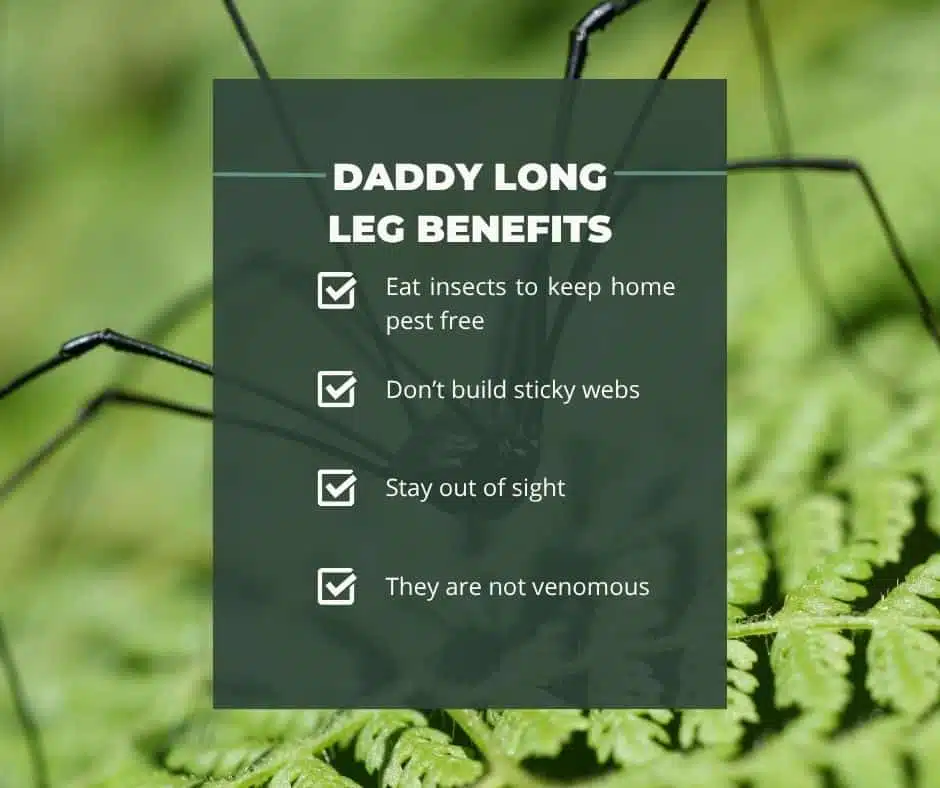
Both harvestmen and cellar spiders have benefits. Harvestmen are scavengers that feed on decomposing organic matter, small insects, and mites. They do not build webs and stay close to the ground.
Cellar spiders actively hunt and eat small insects. They catch flies, mosquitoes, ants, and even other spiders. If you prefer a low-impact approach to pest control, our guide to effective spider control walks through options for keeping populations in check.
That said, a growing number of cellar spiders often means insects are present to feed them. If webs are building up in your basement or garage, it may be a sign of a larger pest population worth investigating.
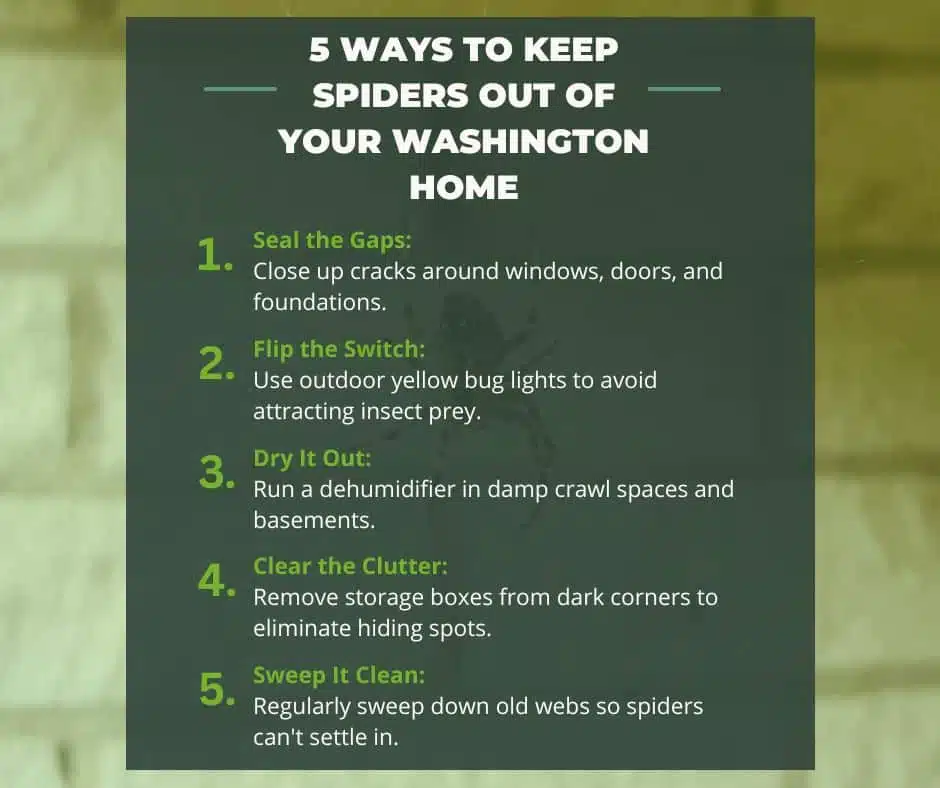
If you would rather not have daddy long-legs inside, a few simple steps can help.
Physical removal: Place a glass or jar over the spider or harvestman, slide a piece of paper underneath, and carry it outside. No chemicals needed.
Prevention tips:
If you are seeing cellar spiders in several areas of your home, our guide to identifying big house spiders can help you figure out what you are dealing with before deciding on the next steps.
What attracts spiders and other pests into a home?
Spiders are primarily drawn indoors in search of food. An influx of spider activity often points to an underlying issue with common prey insects, such as ants, cockroaches, or flies, multiplying inside your living spaces.
How do seasonal weather changes affect indoor pest activity?
As seasons shift, many pests look for shelter from extreme temperatures. While spiders are active year-round, overwintering pests like stink bugs and stinging insects frequently invade homes in the autumn, looking for warmth, making proactive pest prevention essential.
When does a minor pest issue require professional treatment?
Occasional invaders like daddy long-legs can usually be managed with basic sweeping or exclusion tactics. However, fast-multiplying pests like fleas, deeply entrenched ant colonies, or structural nuisances like rodents typically require targeted intervention to be completely eliminated.
A few daddy long-legs here and there are not cause for concern. Some situations do warrant a call:
Bigfoot Pest Management offers no-pressure inspections for homeowners throughout the service area. If you are not sure what you are dealing with, our team can identify the species, assess whether there is an underlying pest issue, and recommend the right approach without overselling treatment you do not need.
Learn more about our spider control services and what to expect from an inspection.
Daddy long-legs are not poisonous, and they are not venomous in any way that matters to humans.
The myth has been around for decades, but it does not hold up under scrutiny. Whether you are looking at a harvestman on your porch or a cellar spider in the corner of your basement, neither one poses a threat to your family.
If you want them gone, the steps are simple. And if the spider count is climbing or you are seeing signs of a larger pest issue, Bigfoot Pest Management is here to help.
Schedule a no-pressure inspection, and we will give you a straight answer on what is going on.