How Do Rats Get in Your House?
Wondering how do rats get in your house? They slip through small exterior holes as…
ElliottAugust 28, 2026

Possums very rarely carry rabies, and that surprises most people. The opossum’s naturally low body temperature makes it a poor host for the rabies virus, so your risk from the possum in your Olympia backyard is far lower than from a raccoon, skunk, or bat.
That said, “rarely” is not “never,” and possums can carry other illnesses. At Bigfoot Pest Management, we help South Sound homeowners understand the real risk and handle nuisance wildlife safely. Here is what the science actually says.
Possums can technically carry rabies, but cases are extremely rare. The animal most North Americans call a “possum” is the Virginia opossum, the only marsupial native to the United States.
Its body runs cooler than most mammals, around 94 to 97 degrees Fahrenheit, and the rabies virus struggles to survive and replicate at that temperature.
So while no wild mammal is completely rabies-proof, opossums are one of the least likely carriers you will encounter. The CDC tracks rabies in wildlife, and the species flagged most often are raccoons, skunks, foxes, and bats, not opossums.
The leading explanation is body temperature. Rabies is a virus that needs a warm host to thrive, and the opossum’s cooler core is an inhospitable environment.
The National Park Service notes the same low-body-temperature reason and points out that opossums also groom away many ticks, which can reduce the spread in an area.
One honest caveat: documented natural rabies cases in opossums do exist in the scientific literature, so the accurate phrasing is “very rarely,” not “impossible.”
For a homeowner, the practical takeaway is that a possum on your property is a low rabies risk, but should still be left alone and never handled.
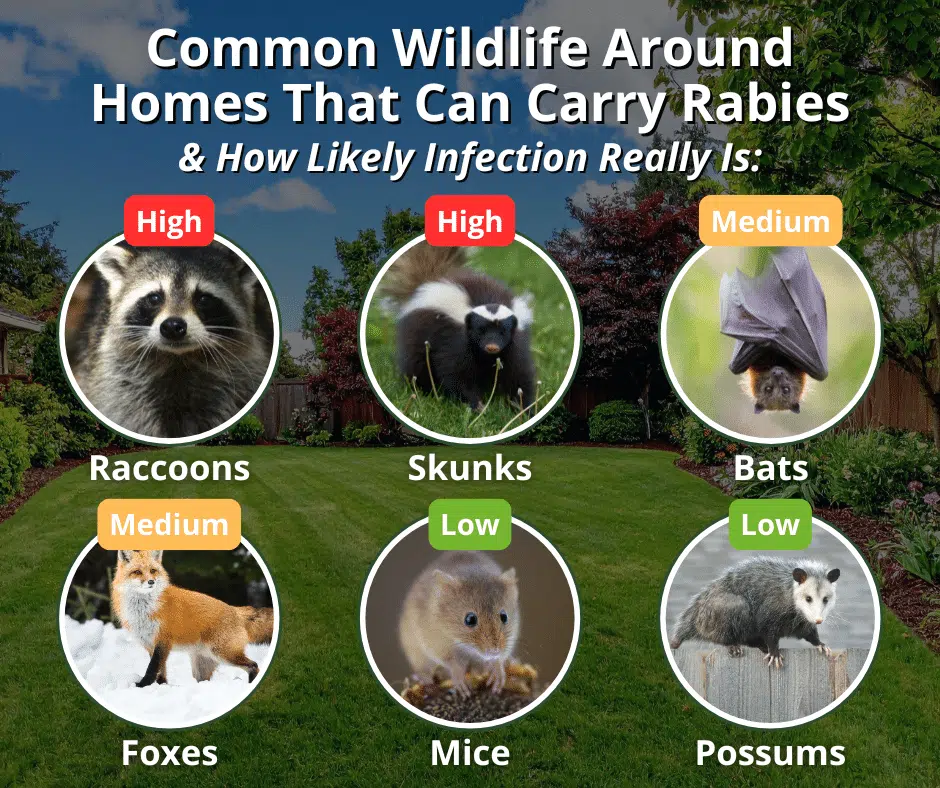
If you want a quick mental ranking of rabies risk among common South Sound visitors, here is the general picture. This is a relative guide, not a guarantee, since any mammal can theoretically contract rabies.
Animal | Relative rabies risk | Notes |
|---|---|---|
Bat | High | A leading source of human rabies in the U.S. |
Raccoon | High | Common rabies vector, especially in the eastern U.S. |
Skunk | High | Frequent carrier in many regions |
Fox | Moderate | Less common than the above, still a known vector |
Opossum | Very low | Cooler body temperature; rarely a host |
Low rabies risk does not mean a possum is harmless. Opossums can carry or transmit several other illnesses, so the safest rule is to keep your distance. Diseases and parasites associated with opossums include:
Because possums den in crawlspaces, under decks, and around trash, the hidden dangers of nuisance wildlife and rodents often come from droppings and parasites rather than from a bite. Sealing the spaces they use is the most effective long-term fix.
Pets deserve special attention here. Dogs and cats may corner or fight a possum, which risks bites, scratches, and exposure to the fleas and ticks that possums carry.
Those parasites can pass on their own diseases, so keeping pets up to date on flea, tick, and rabies vaccinations is a sensible precaution, even though the rabies risk from the possum itself is low. If your pet tangles with a possum, clean any wounds and call your veterinarian for guidance.
Keeping pet food indoors and supervising pets at night also reduces the chance of an encounter in the first place.
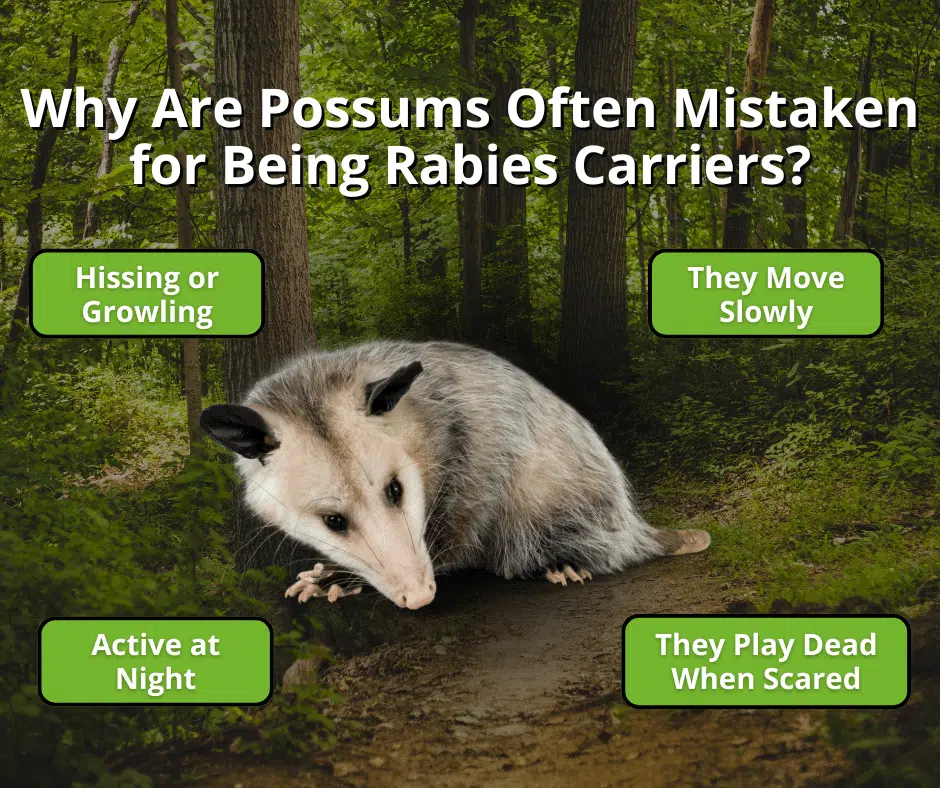
Most “rabid possum” sightings are actually a healthy possum putting on a show. When threatened, opossums hiss, drool, bare their 50 teeth, and may “play dead,” a fear response called thanatosis.
People often read those behaviors as rabies, but they are normal bluffing. True neurological rabies signs in any animal can include disorientation, paralysis, and aggression, but you should never approach an animal to assess it.
If a possum is active during the day, that alone is not proof of rabies, since opossums sometimes forage in daylight when food is scarce.
Wash the wound and call a medical professional right away. Rabies is preventable but fatal once symptoms appear, so any bite or scratch from a wild animal should be evaluated by a doctor or your local health department, and any animal bite to a pet should go to your veterinarian.
Do not try to catch the animal yourself. In Washington, relocating trapped wildlife is restricted, which is another reason to let licensed professionals handle removal.
The CDC’s guidance on rabies exposure is the right reference for next steps, and your provider can decide whether post-exposure treatment is needed.
Possums show up for the same three reasons most wildlife does: food, water, and shelter. They are opportunistic scavengers, so an unsecured trash can, a bowl of pet food left on the porch, fallen fruit, or a compost pile is an open invitation.
They also look for safe, dry places to den, which is why crawlspaces, spaces under decks and sheds, garages, and woodpiles are such common spots in South Sound neighborhoods.
A possum that finds an easy meal and a sheltered corner has little reason to leave, and a denning female can bring young along with her. Removing the attractants is the first and most effective step, because trapping alone does nothing if the next possum finds the same buffet.
The best way to discourage possums is to take away the food and seal the spaces they den in. Secure garbage in cans with tight, latching lids, and bring pet food indoors overnight rather than leaving it out. Pick up windfall fruit and birdseed, and keep compost in a closed bin.
Around the structure, close off access under decks, porches, and sheds with hardware cloth or lattice, and screen crawlspace and foundation vents so a possum cannot push its way in. Clear brush piles, trim back overgrown vegetation, and keep woodpiles off the ground and away from the house.
These same steps also make your property less attractive to rats and other nuisance wildlife, so the effort does double duty.
Because Washington restricts how trapped wildlife can be handled and relocated, focus your own efforts on prevention and let a licensed professional manage any removal.
What diseases do possums carry?
Possums can carry leptospirosis, salmonella, tularemia, and coccidiosis, and they often host fleas, ticks, and mites. Rabies is possible but very rare. Most risk to people and pets comes from droppings, contaminated water, and parasites rather than from bites.
Can you get rabies from a possum?
It is possible, but extremely unlikely. Opossums rarely carry rabies because of their low body temperature. Even so, treat any bite or scratch from a wild animal as a medical matter and contact a doctor or health department.
Are possums dangerous to humans or pets?
Possums are generally not aggressive and prefer to bluff or play dead rather than fight. The bigger concerns are the diseases and parasites they can carry, plus the mess and damage they cause when denning under a home. Keep pets away from them and never handle one.
What are the signs of a rabid opossum?
Hissing, drooling, and baring teeth are usually defensive bluffing, not rabies. Genuine rabies signs in wildlife can include disorientation, stumbling, paralysis, and unprovoked aggression. Because you cannot safely tell from a distance, contact a professional rather than approaching.
Should I remove a possum myself?
No. Trapping and relocating wildlife is restricted in Washington, and handling a possum risks bites, scratches, and exposure to parasites. The safer route is professional removal, plus sealing the entry points so it cannot return. Our team handles exclusion and repairs to keep wildlife out for good.
Call a professional when a possum is denning under your home, returning night after night, or getting into trash, pet food, or your crawlspace, because at that point, removal alone will not stop the next one.
A licensed technician can safely remove the animal, clean up contaminated areas, and seal the gaps that let it in. Bigfoot Pest Management serves Olympia, Lacey, Tumwater, Yelm, Centralia, Chehalis, and Shelton, and we use least-toxic, family-safe methods.
If you are not sure whether you have a possum, a rat, or another visitor, our pro tips for tracking down a nest are a good place to start, or we can simply come take a look.
So, do possums carry rabies? In almost every case, no. Possums are one of the least likely wildlife carriers of rabies. Still, they can create other problems when they live too close to your home.
Understanding real risks helps you respond calmly and safely. It also helps you know when professional support is the right step.
If you are dealing with possums or other wildlife on your property, Bigfoot Pest Management can help evaluate the situation and recommend safe, effective solutions.