

What Does a Home Infestation of Fleas Look Like?


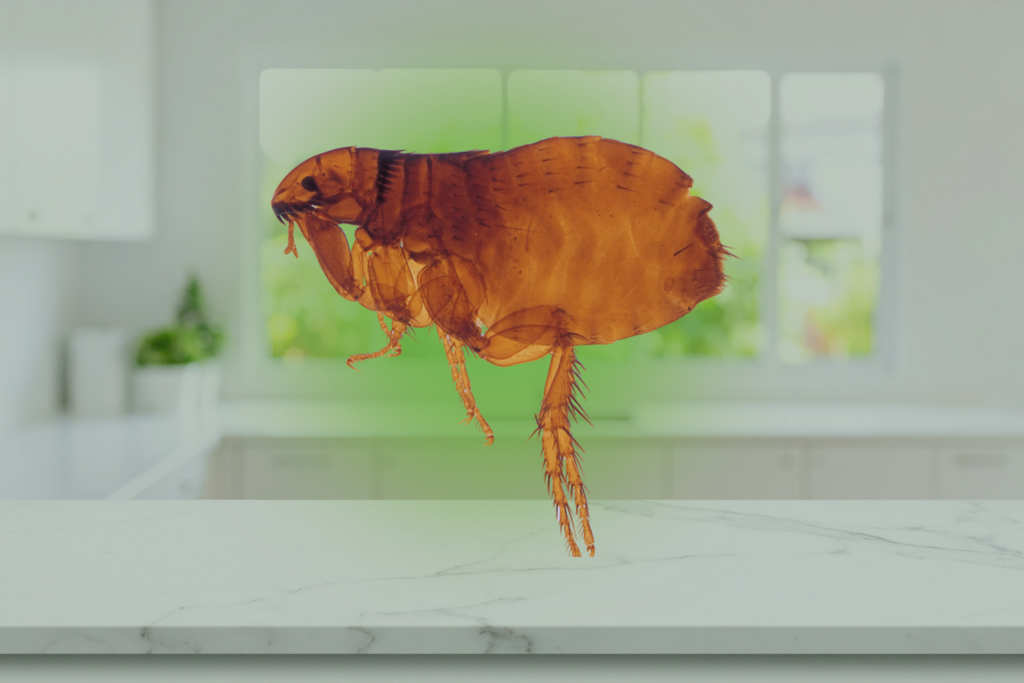
An infestation of fleas looks like repeated bites on people or pets, constant scratching, and small dark insects jumping from carpets, furniture, or pet bedding.
Inside a home, fleas often stay hidden in carpets, cracks, and soft surfaces, which allows the infestation to grow quietly until it becomes hard to ignore.
Why Flea Infestations Are Easy to Miss at First
Flea infestations rarely begin with an obvious warning sign. Many homeowners notice mild itching, a few unexplained bites, or a pet scratching more than usual and assume it will pass.
Because fleas are so small and move quickly, they often disappear before you can get a good look at them.
Another reason flea infestations are easy to miss is where fleas spend most of their time.
Adult fleas are only a small part of the problem. Most of the infestation exists as eggs and larvae hidden deep in carpet fibers, under furniture, inside pet bedding, or along baseboards. These stages are nearly impossible to see without close inspection.
This means a home can have an active flea infestation for weeks before the signs become obvious. By the time fleas are jumping or bites are appearing regularly, the population has already grown.
What Does an Infestation of Fleas Look Like in a Home?
Inside a home, a flea infestation shows up as repeated activity rather than a single sighting.
Fleas are tiny, dark brown insects that jump when disturbed. They are most often seen near the floor in areas where pets rest or where people walk often.
Common signs homeowners notice include:
- Fleas jumping onto socks or pant legs
- Small black specks on floors, rugs, or furniture
- Pets are scratching more when indoors
- Bites appearing every few days
Fleas prefer warm, shaded areas and tend to avoid open spaces. This is why infestations often begin in living rooms, family rooms, hallways, and near pet sleeping areas.
What Does an Infestation of Fleas Look Like on Pets?
Pets are usually the first clear indicator of a flea infestation. Dogs and cats provide warmth and easy access to blood, making them ideal hosts. Even pets that spend limited time outdoors can bring fleas inside.
Signs fleas are affecting pets include:
- Constant scratching or chewing at the skin
- Red, irritated, or inflamed patches
- Hair thinning or bald spots
- Flea dirt in the fur
Flea dirt looks like small black grains. When placed on a damp paper towel, it often turns reddish brown. This is digested blood and confirms flea activity.
If fleas are present on pets, it almost always means fleas are also present in the home environment.
What Does an Infestation of Fleas Look Like on Humans?
Fleas will bite people, especially when pets are nearby, or flea populations grow. Human flea bites are often mistaken for mosquito bites at first.
Flea bites usually:
- Appear as small red bumps
- Occur in clusters or short lines
- Causes intense itching
Bites are most commonly found on ankles, feet, calves, and around the waistline. Fleas tend to target areas close to the floor, which helps distinguish them from other biting pests.
If bites keep appearing indoors, especially after cleaning or pet treatment, it is a strong sign fleas are living and breeding inside the home.
What Does an Infestation of Fleas Look Like in Carpets and Furniture?
Carpets and upholstered furniture are ideal hiding places for fleas. Flea eggs fall off pets and settle deep into fibers, where they are protected from light, cleaning, and foot traffic.
Signs fleas are living in carpets or furniture include:
- Fleas jumping during vacuuming
- Bites after sitting on couches or chairs
- Black specks embedded in fabric
Many homeowners vacuum frequently but still struggle with flea problems. This is because vacuuming removes some adult fleas but often leaves eggs and larvae behind.
These stages continue to develop and restart the infestation.
What Does an Infestation of Fleas Look Like in Bedrooms?
Bedrooms are common problem areas, especially when pets sleep on or near beds. Fleas can spread into mattresses, box springs, rugs, and bedding.
Signs of flea activity in bedrooms include:
- Bites that appear overnight
- Fleas are seen near bed frames or nightstands
- Pets scratching or pacing at night
Because people spend long periods sleeping, flea activity in bedrooms often feels more severe. Ongoing bites can disrupt sleep and cause daily discomfort.
What Does an Infestation of Fleas Look Like in Multi-Room Homes?
In larger homes, flea infestations rarely stay confined to one area. Fleas spread through pet movement, shared flooring, and everyday foot traffic.
Signs fleas have spread include:
- Bites occurring in multiple rooms
- Fleas appearing in areas pets rarely use
- Increased activity in hallways or staircases
Once fleas spread throughout a home, spot treatments and sprays are rarely effective. At this stage, a whole-home approach is usually needed.
How to Tell If Fleas Are Actively Infesting Your Home?
Knowing whether fleas are actively infesting your home is important because early action can prevent a small issue from becoming a long-term problem. Fleas can remain hidden for weeks, so visible insects are not the only sign to watch for.
One of the clearest indicators of an active infestation is consistent flea activity, not just a single sighting. If fleas appear repeatedly over several days, especially in the same areas, it usually means they are breeding indoors.
Signs Fleas Are Actively Living in Your Home
Active infestations often include multiple signs at the same time, such as:
- Fleas jumping onto socks, shoes, or pant legs
- New flea bites appearing every few days
- Pets scratching even after flea baths or medication
- Fleas are seen when vacuuming or moving furniture
- Flea dirt reappearing shortly after cleaning
When fleas are only being carried inside from outdoors, sightings are usually rare. Repeated sightings suggest an indoor infestation.
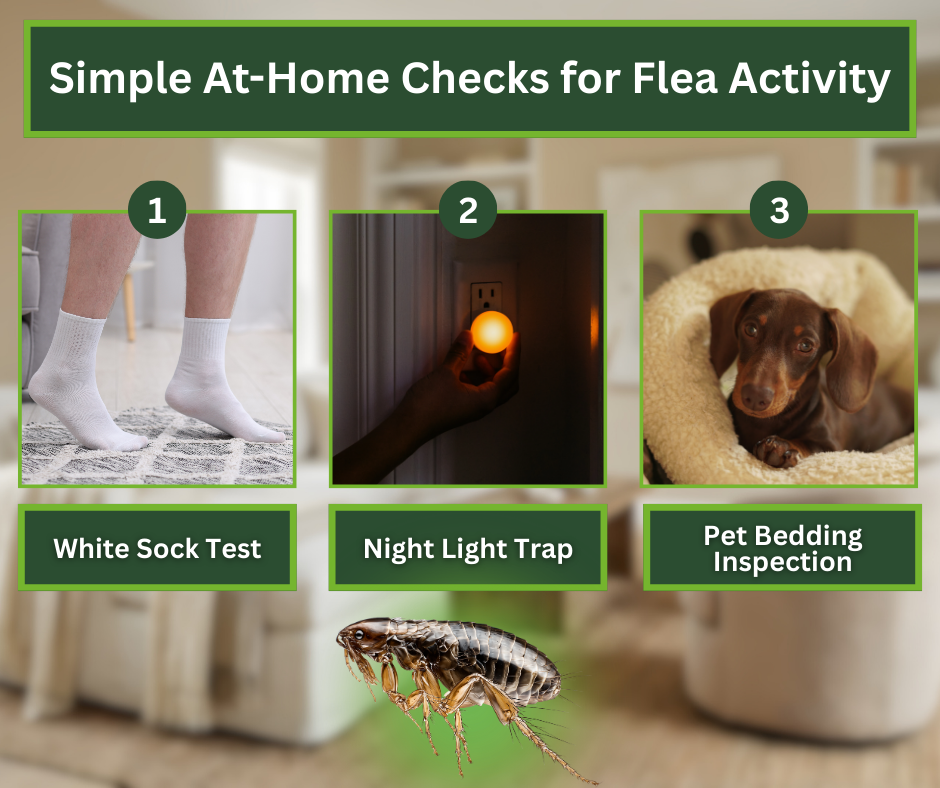
Simple At-Home Checks for Flea Activity
White sock test
Wear white socks and walk slowly across carpeted rooms. Fleas are easier to spot on light colored fabric and may jump onto your socks.
Night light trap
Place a shallow bowl of warm water mixed with dish soap under a night light overnight. Fleas are attracted to warmth and light and may jump into the water.
Pet bedding inspection
Check pet beds, blankets, and favorite resting spots for flea dirt or live fleas. These areas often show signs first.
Signs the Infestation Is Growing
If flea activity increases instead of improving, the infestation is likely growing. Warning signs include:
- Bites appearing in new areas of the home
- Fleas start showing up in rooms that pets rarely enter
- Continued activity during cooler months in Washington
These signs suggest flea eggs have hatched, and the population is expanding indoors.
Why Flea Infestations Get Bad So Quickly
Fleas reproduce quickly. A single flea can lay dozens of eggs, and those eggs can remain hidden for weeks before hatching.
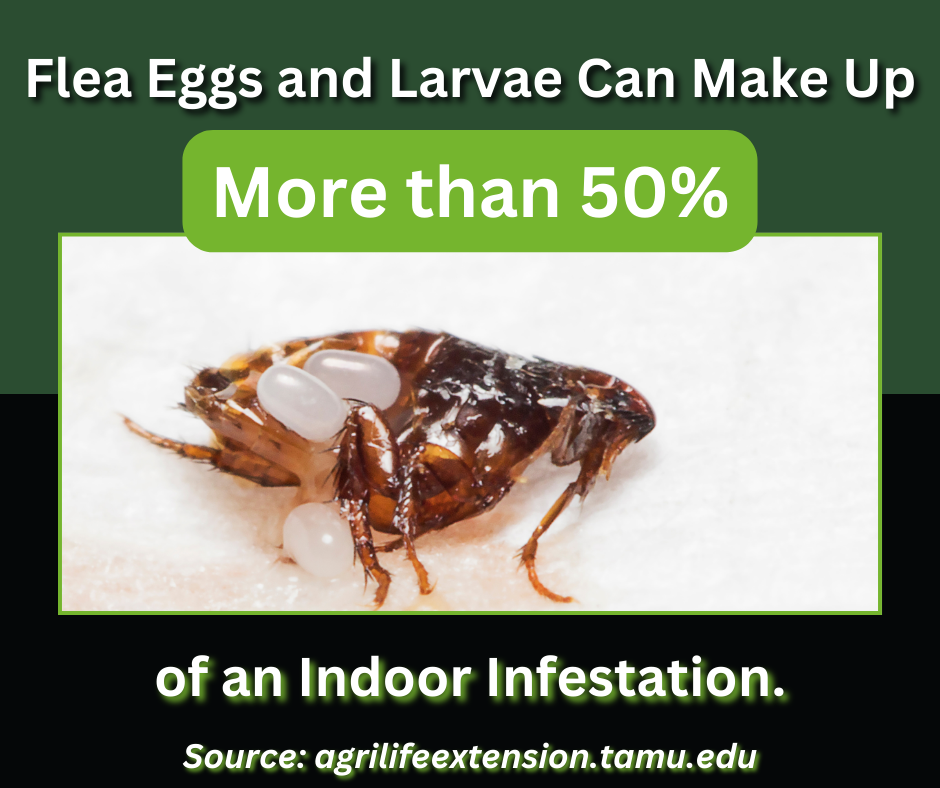
Research shows flea eggs and larvae can make up more than half of an indoor infestation.
This explains why infestations often return after treatments that only target adult fleas. Warm indoor temperatures allow fleas to reproduce year-round, even when outdoor activity slows.
When a Flea Infestation Requires Professional Pest Control
Professional treatment is often needed when:
- Fleas return after repeated cleaning
- Bites continue for several weeks
- Pets remain affected despite medication
Many flea infestations last months when professional help is delayed. Comprehensive treatment targets adult fleas, eggs, and larvae together, reducing the risk of repeat outbreaks.
How Bigfoot Pest Management Treats Flea Infestations
Professional flea control focuses on stopping the flea life cycle throughout the home. Treatment plans address visible activity and hidden breeding areas.
Typical steps include:
- A detailed inspection of affected rooms
- Interior treatments for carpets, furniture, and baseboards
- Exterior treatments to reduce re-infestation
- Guidance on coordinating pet care
This approach helps eliminate fleas more effectively than surface treatments alone.
How to Prevent a Flea Infestation From Returning
Preventing fleas from returning requires more than a one-time treatment. Even after fleas are removed, eggs can remain hidden and hatch later. A complete prevention plan addresses pets, indoor spaces, and outdoor areas.
Ongoing Pet Care Is Essential
Pets are the most common way fleas return to a home. Consistent prevention is critical.
Helpful steps include:
- Using vet-approved flea prevention year-round
- Grooming pets regularly and checking for flea dirt
- Washing pet bedding weekly in hot water
Skipping prevention during cooler months allows fleas to return unnoticed.
Indoor Prevention Tips for Homeowners
Reducing indoor flea risks requires regular maintenance.
Recommended steps:
- Vacuum carpets, rugs, and furniture often
- Empty vacuum canisters outside the home
- Wash throw blankets and cushion covers regularly
- Reduce clutter where fleas can hide
Focus on areas where pets rest or sleep, as these spots are most likely to see renewed activity.
Outdoor Prevention Matters Too
Fleas often enter homes from yards.
Outdoor prevention tips:
- Keep grass trimmed and debris removed
- Clean shaded areas where pets rest
- Limit wildlife access near the home
Treating only the interior may leave fleas outside ready to return.
Why Ongoing Pest Control Helps
Routine pest control services help detect flea activity early and reduce the risk of re-infestation. Homes with ongoing service often experience fewer repeat flea problems because issues are addressed before populations grow.
|
Area of the Home |
Common Signs of Fleas |
|
Pets |
Scratching, flea dirt, hair loss |
|
Carpets |
Fleas jumping, black specks |
|
Furniture |
Bites after sitting, flea dirt |
|
Bedrooms |
Overnight bites, pet activity |
|
Entire Home |
Repeated sightings, ongoing bites |
Related Questions
What do fleas look like compared to bed bugs?
Fleas are smaller and jump quickly. Bed bugs are flat and hide near beds and furniture.
Can fleas live in a house without pets?
Yes. Fleas can survive on people or wildlife that enter the home.
How long does a flea infestation last indoors?
Without proper treatment, infestations can last several months due to hidden eggs.
Do flea infestations spread from room to room?
Yes. Fleas move easily through foot traffic and pets.
Are flea infestations worse in carpeted homes?
Carpets provide hiding places that make nests and infestations harder to eliminate.
Conclusion
Flea infestations are uncomfortable and disruptive, but they can be controlled with the right approach. Early detection and proper treatment reduce the risk of long-term problems.
If you are seeing flea bites, pet scratching, or flea activity inside your home, a professional inspection can help identify the source and stop the infestation before it spreads further.
Bigfoot Pest Management offers flea control solutions designed to protect your home, pets, and family over the long term.

Where Carpet Beetles Come From and How to Stop Them
If you have noticed tiny beetles near your windowsills or found mysterious holes in your wool sweaters, you might be dealing with carpet beetles. These…

Honey Bee vs Yellow Jacket: Which One Is in Your Yard?
If you have noticed stinging insects flying around your yard in Olympia, you are not alone. As temperatures rise across Thurston County, activity increases around…