

What Do Carpenter Ants Look Like in Washington Homes?


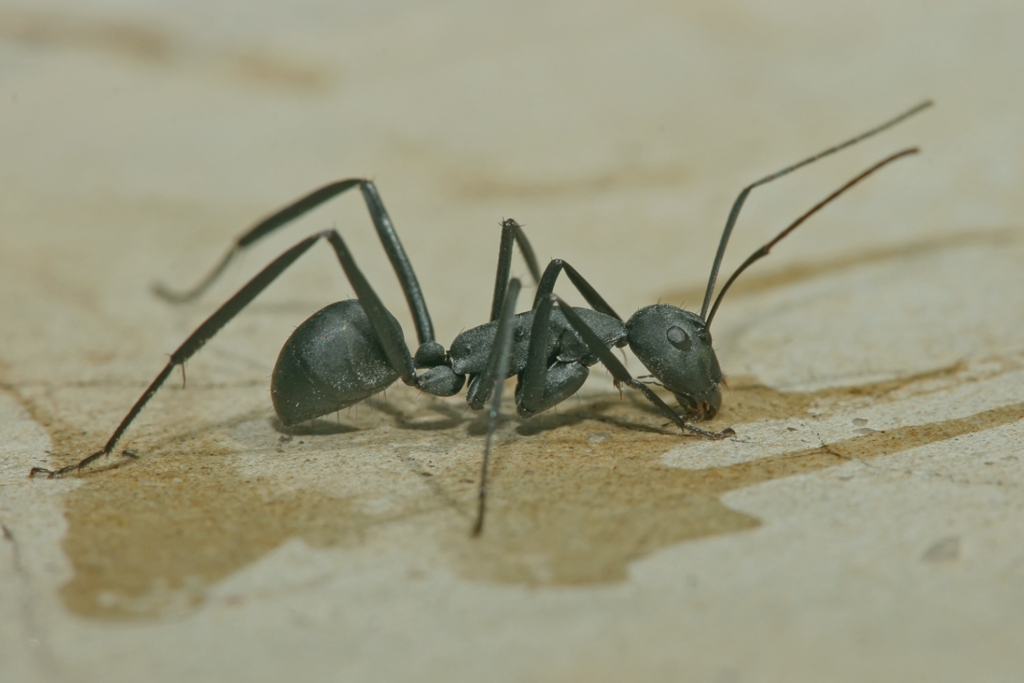
When homeowners ask what do carpenter ants look like in Washington homes, the answer is simple. Carpenter ants are large black or dark red ants with a narrow waist, bent antennae, and strong jaws. They often appear around damp wood, crawlspaces, decks, or any area affected by moisture.
Many people confuse them with termites or other ant species because they can look similar at first glance. Learning how to identify carpenter ants early helps protect your home from hidden damage and helps you decide when it is time to call Bigfoot Pest Management for an inspection.
Understanding Carpenter Ants in Washington Homes
Carpenter ants are one of the most common wood-damaging pests in Washington. They do not eat wood the way termites do, but they tunnel through it to build nests. These tunnels weaken the structure over time.
Why They Thrive in Washington
Washington’s environment makes conditions ideal for carpenter ants because:
- Long rainy seasons keep wood damp
- Shade from trees slows drying
- Crawl spaces often develop moisture pockets
- Older wood structures soften over time
- Homes near forests give ants easy access
Many homes in Western Washington sit near tall trees and experience frequent moisture. This creates softened wood that carpenter ants prefer. Crawl spaces are especially vulnerable because they trap humidity.
Bigfoot Pest Management commonly sees carpenter ant infestations in homes with a history of leaks, poor ventilation, or aging exterior wood.
Homes with previous moisture problems are more likely to experience repeated carpenter ant activity if repairs are not made.
What Do Carpenter Ants Look Like in Washington Homes?
Carpenter ants are among the largest ants in the region, which makes visual identification easier once you know what to look for.
Basic Features
- Size: One-fourth inch to one-half inch long
- Color: Black, dark red, or a mix of red and black
- Waist: Narrow and well-defined
- Antennae: Noticeably bent
- Body: Smooth and shiny
- Wings: Present in swarmers during spring and early summer
Where Homeowners Commonly See Them
- Baseboards and window trim
- Deck posts and railings
- Crawl spaces and attics
- Siding near moisture
- Kitchens and bathrooms with leaks
How to Tell If It Is a Carpenter Ant
- Larger size than other ants in Washington
- Slow, steady walking pattern
- Frequent activity near wood and moisture
- Winged ants indoors during spring
Common Forms of Carpenter Ants
|
Type |
What It Looks Like |
When You See It |
|
Worker |
Black or dark red, strong jaws |
Any time of year |
|
Queen |
Much larger, black or dark red |
Rare to see |
|
Swarmers |
Winged, larger, and appear in groups |
Spring or early summer |
Workers do most of the tunneling. Swarmers leave the nest to start new colonies, which is why many homeowners first notice a problem when winged ants appear inside.
Carpenter Ant Signs Beyond Appearance
Carpenter ants often stay hidden deep inside wood, so signs of activity may appear before you see the ants themselves.
Important Warning Signs
- Small piles of frass that look like sawdust
- Wood shavings mixed with insect parts
- Rustling or tapping inside walls
- Smooth tunnels carved inside wood
- Loose wings under windows or doors
- Ants entering or exiting tiny cracks
Frass is one of the strongest clues of a nest. Carpenter ants keep their tunnels clean, so they push debris out through small openings.
Noise inside the walls can occur late at night when the house is quiet. Damaged wood often has clean, sanded-looking tunnels rather than rough or muddy surfaces.
Carpenter Ants vs Termites in Washington
Carpenter ants and termites often swarm around the same time, which causes confusion. Learning a few key traits makes identification simple.
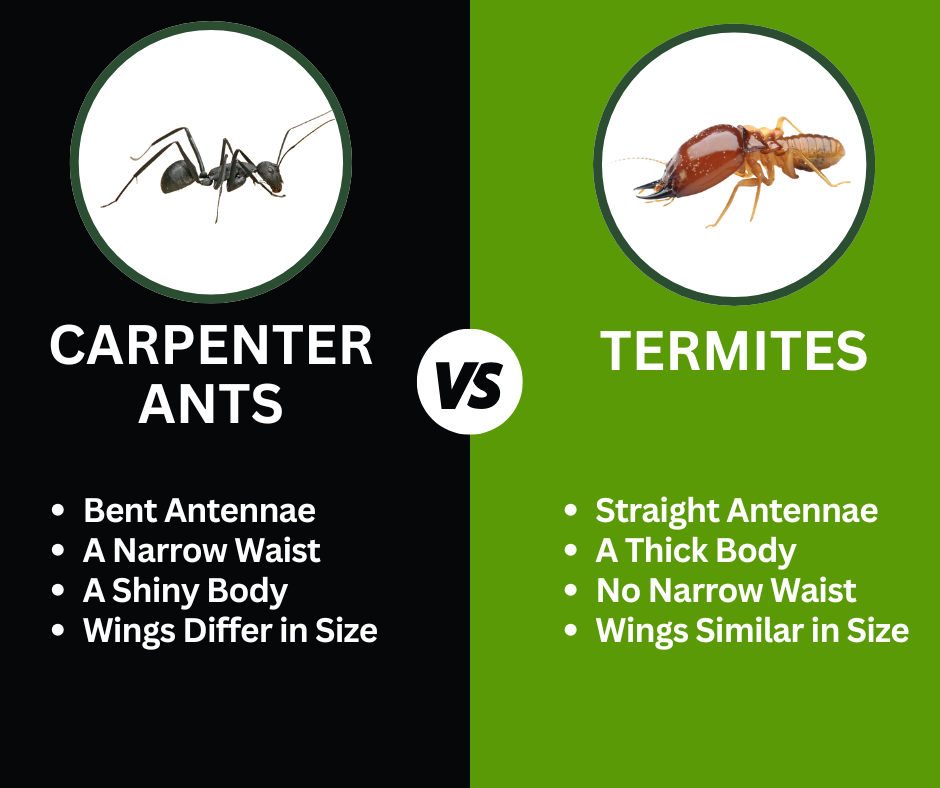
Carpenter ants have bent antennae, a narrow waist, and a shiny body. Their wings differ in size, with the front wings longer than the back wings.
Termites, on the other hand, have straight antennae, a thick body with no narrow waist, and wings that are all the same size. Termite wings are pale and fragile, and they often drop in piles.
Damage patterns differ as well. Carpenter ants create smooth, clean tunnels in softened wood.
Termite tunnels look rough and are filled with soil because termites eat the wood and leave behind mud-like material.
Even though termites are less common in many parts of Western Washington, they do appear in areas with warm pockets or constant moisture. Carpenter ants, however, are widespread throughout the region.
Knowing the difference helps you choose the right treatment and inspection.
Carpenter Ants vs Other Ants Common in Washington
Many ants in Washington enter homes, so it helps to know which ones are harmless and which ones may damage wood.
Odorous House Ants
- Very small
- Dark brown or black
- Give off a rotten smell when crushed
- Often appear near food and water sources
Pavement Ants
- Small and dark
- Live in cracks of sidewalks and driveways
- Rarely damages wood
- Slow-moving and easy to identify
Thatching Ants
- Large with red and black bodies
- Build mounds outdoors
- Common near wooded or rural areas
How Carpenter Ants Stand Out
- Much larger than other local ants
- Consistently linked to moisture and damaged wood
- Leave piles of frass, unlike most other species
- Can form multiple nests inside and outside the home
If you notice wood shavings or ants that are significantly larger than usual, they are likely carpenter ants.
Why Carpenter Ants Choose Washington Homes
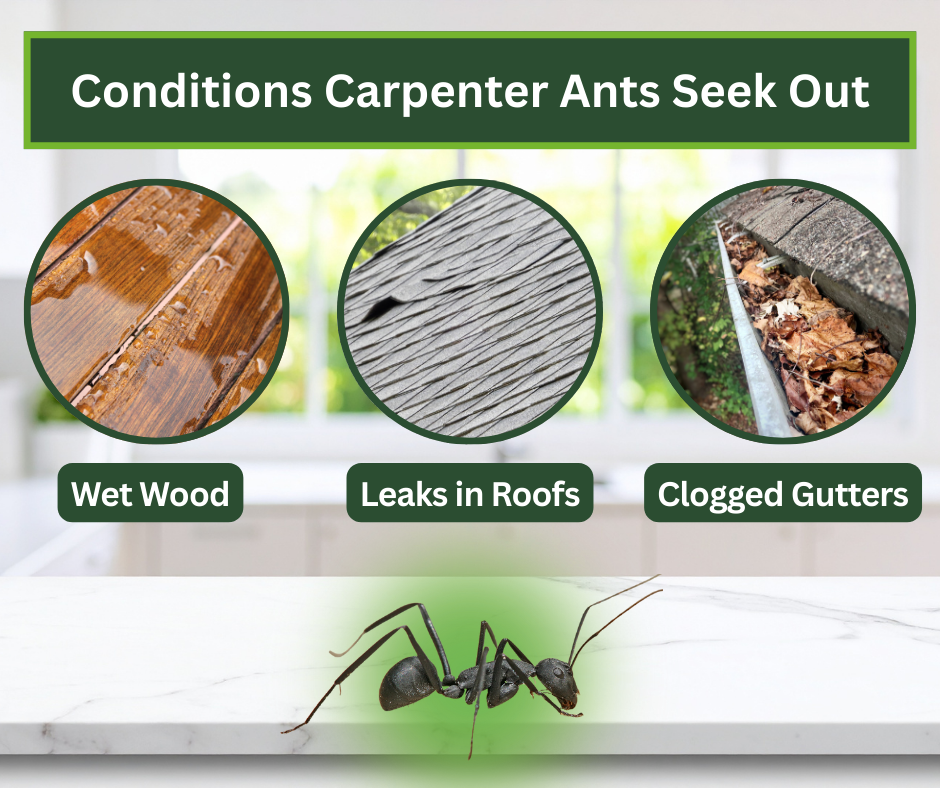
Moisture is the biggest factor that attracts carpenter ants. Washington’s rainy climate, shaded homes, and dense vegetation create perfect nesting conditions.
Conditions Carpenter Ants Seek
- Soft or water-damaged wood
- Leaks in roofs, siding, or plumbing
- Clogged or overflowing gutters
- Poor airflow in crawl spaces
- Firewood stored near the home
- Branches touching roofs or siding
Because moisture is the root cause in many cases, fixing leaks and improving ventilation is key.
Bigfoot Pest Management often finds carpenter ant nests in areas where leaks went unnoticed or where older wood softened over time.
How to Identify a Carpenter Ant Nest in Your Home
Carpenter ants build large colonies with parent nests and satellite nests. This makes them harder to eliminate without a full inspection.
Indoor Nest Locations
- Damp framing in crawl spaces
- Behind bathrooms or kitchens with leaks
- Window sills with long-term moisture
- Porch beams and wall voids
- Under old flooring or damaged trim
Outdoor Nest Locations
- Old tree stumps
- Rotting logs
- Tree roots
- Damp firewood stacks
Clues That Point to a Nest
- Repeated ant trails to the same area
- Piles of frass pushed through cracks
- Tiny openings in wooden surfaces
- Faint tapping or rustling sounds
Nests can be hidden deep inside structures, so professional inspections are often needed to find all active areas and prevent ongoing damage.
When to Call Bigfoot Pest Management
Carpenter ants rarely go away on their own. If you see signs of activity, it is best to get help early.
Schedule an Inspection If You Notice:
- Large ants indoors more than once
- Wood shavings near walls or trim
- Winged ants inside during spring
- Nighttime ant activity
- Ongoing leaks or moisture problems
- Activity near crawlspaces, decks, or siding
DIY sprays only reach the ants you see. They do not reach hidden nests. Bigfoot Pest Management can identify the species, find active nests, and recommend steps to prevent future infestations.
How Bigfoot Pest Management Treats Carpenter Ants
Bigfoot Pest Management uses a targeted and thorough process to eliminate carpenter ants in Washington homes.
What A Professional Process Includes:
- Detailed inspection of the interior and exterior
- Species identification
- Location of parent and satellite nests
- Targeted treatment applied directly to active zones
- Moisture assessment and recommendations
- Follow-up visits if necessary
This approach removes the colony at its source and helps prevent ants from returning.
Preventing Carpenter Ants in Washington Homes
Moisture control and basic home maintenance go a long way in preventing carpenter ants.
Seasonal Prevention Checklist
- Repair roof and plumbing leaks right away
- Clean gutters two to four times a year
- Seal cracks around windows and doors
- Trim shrubs and tree limbs away from siding
- Store firewood several feet away from the home
- Improve ventilation in damp rooms
- Check crawl spaces for standing water
- Schedule yearly pest inspections
These steps help protect both older and newer homes from future infestations.
Related Questions
How do you know if carpenter ants are damaging your home?
Look for piles of ant frass, softened wood, small openings, or sounds inside walls.
What attracts carpenter ants inside?
Moisture, food crumbs, and easy access points draw carpenter ants indoors.
Do carpenter ants come back every year?
They can return if moisture problems remain or if all nests were not removed.
Can carpenter ants damage new homes?
Yes. Any home with damp wood can attract carpenter ants.
Are carpenter ants dangerous to people or pets?
They are not dangerous. They can bite, but do not spread disease.
How do you get rid of carpenter ants permanently?
Locate the nest, fix moisture issues, seal entry points, and use professional prevention and treatments.
Conclusion
Carpenter ants can stay hidden for a long time, and early signs like frass or moisture problems are key warnings. If you think carpenter ants may be in your home, a detailed inspection can help prevent further damage.
Bigfoot Pest Management is ready to help Washington homeowners identify carpenter ant activity and remove colonies safely. For clear answers and a plan that protects your home, schedule an inspection today.

Where Carpet Beetles Come From and How to Stop Them
If you have noticed tiny beetles near your windowsills or found mysterious holes in your wool sweaters, you might be dealing with carpet beetles. These…
Honey Bee vs Yellow Jacket: Which One Is in Your Yard?
If you have noticed stinging insects flying around your yard in Olympia, you are not alone. As temperatures rise across Thurston County, activity increases around…