Stopping Rodent Damage in Your Olympia Home
Rodent damage is the destruction rats and mice cause when they chew, nest, and burrow…
ElliottAugust 28, 2026

No, boxelder bugs are not harmful to people, pets, or your home. They do not sting, they do not spread disease, and they almost never bite. Still, when hundreds of them cover your sunny siding in late September, it is easy to worry.
In Thurston County, the bug you are seeing is the western boxelder bug, and fall is when it looks for a warm place to spend the winter.
Every fall, the team at Bigfoot Pest Management hears from Olympia, Lacey, and Tumwater homeowners asking the same question: Are boxelder bugs harmful?
Below, we cover what these bugs are, the small problems they do cause, why they pick your house, and how to keep them out.
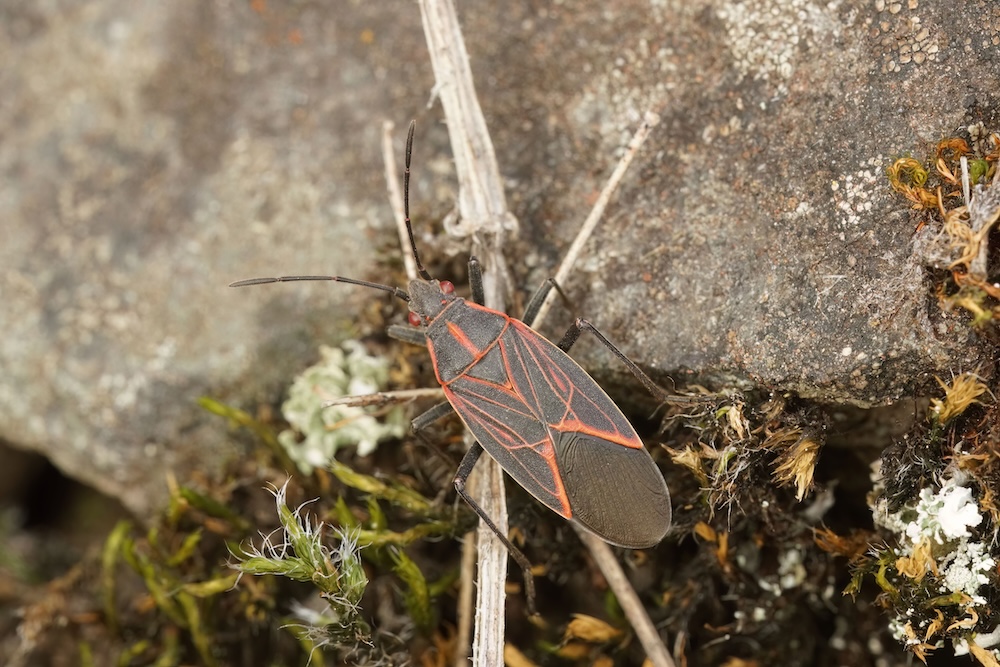
Western boxelder bugs (Boisea rubrolineata) are the boxelder bugs that live in western Washington. They are true bugs, not beetles. They feed on the seeds of boxelder, maple, and ash trees.
Here is how to spot one:
Most national articles describe the eastern boxelder bug. Our western species looks and acts much the same, but its red markings are thinner. In the Northwest, western boxelder bugs have one generation per year.
Several fall bugs get mixed up with boxelder bugs. This quick chart can help.
| Bug | Size | Key marks | Harmful? |
|---|---|---|---|
| Western boxelder bug | About 1/2 inch | Black with thin red lines; red nymphs | Nuisance only |
| Western conifer seed bug | About 3/4 inch | Brown, flat, leaf-shaped flaps on back legs | Nuisance only |
| Brown marmorated stink bug | About 5/8 inch | Shield shape, white bands on antennae | Nuisance, bad smell |
| Kissing bug | Over 1 inch | Long, cone-shaped head | Not known to live in Washington |
Boxelder bugs are not harmful to humans. According to the National Pesticide Information Center, they do not sting and do not spread disease.
They are not known to bite people. In rare cases, a trapped bug may pinch skin in self-defense. That can leave a small red spot, a lot like a mosquito bite.
Their mouthparts are made to pierce seeds and suck plant juice. They do not feed on blood, and they have no venom.
Some people worry that boxelder bugs are kissing bugs. The Washington State Department of Health says the kissing bugs that carry Chagas disease are not known to live in Washington.
Kissing bugs are also much larger, at more than an inch long.
Boxelder bugs are not harmful to pets. The University of California IPM program notes that they do not injure people or pets. Their bright red and orange colors warn birds and other animals that they taste bad. Most dogs and cats lose interest fast after one try.
If your pet eats a large number of any bug and seems sick, call your vet to be safe.
Boxelder bugs cause only minor plant damage. They suck juice from seeds, leaves, and young twigs. This can leave small yellow spots or cause a few leaves or fruits to grow a little misshapen. Healthy trees are not seriously hurt.
Their favorite host is the female (seed-bearing) boxelder tree. Maples and ash come next, and they sometimes visit fruit trees. Boxelder bugs are native to North America, so they are not an invasive species.
Yes, boxelder bugs play a small role in a healthy yard. They help recycle nutrients by feeding on fallen seeds. Spiders, some birds, and other insects eat them, especially the young nymphs in spring and summer.
That is one reason pest pros do not try to wipe them out across a whole neighborhood. The goal is simple: keep them outside, where they belong. A few boxelder bugs on a tree trunk in July are nothing to worry about.
The trouble starts in fall, when they move from the trees to your walls. A plan that focuses on your house, not the whole yard, protects your home and leaves the rest of nature alone.
Boxelder bugs do not chew wood, wiring, drywall, or fabric. They do not breed inside, and they do not eat food in your kitchen. The problems they cause are about mess and numbers.
| Concern | Risk level | What to expect |
|---|---|---|
| People | Very low | No stings or disease; bites are rare |
| Pets | Very low | Bad taste keeps most pets away |
| Plants and trees | Low | Minor spotting on leaves and seeds |
| House structure | None | They do not chew or tunnel |
| Curtains, walls, fabric | Moderate nuisance | Droppings can stain |
| Food and pantry | None | They do not feed indoors |
Boxelder bugs come to your house to survive the winter. Each September, adults leave their host trees and gather on warm, sunny walls that face south or west. As nights get colder, they crawl into cracks around windows, gaps under siding, attic vents, and wall voids.
Once inside the walls, they do not eat. According to WSU Entomology, they live off stored body fat until spring.
This habit of hiding for the winter is called overwintering, and boxelder bugs aren’t the only pest that does it. Like stink bugs that overwinter inside homes, they wait out the cold in wall voids and come back out when spring warms things up.
A few local factors make South Sound homes a target:
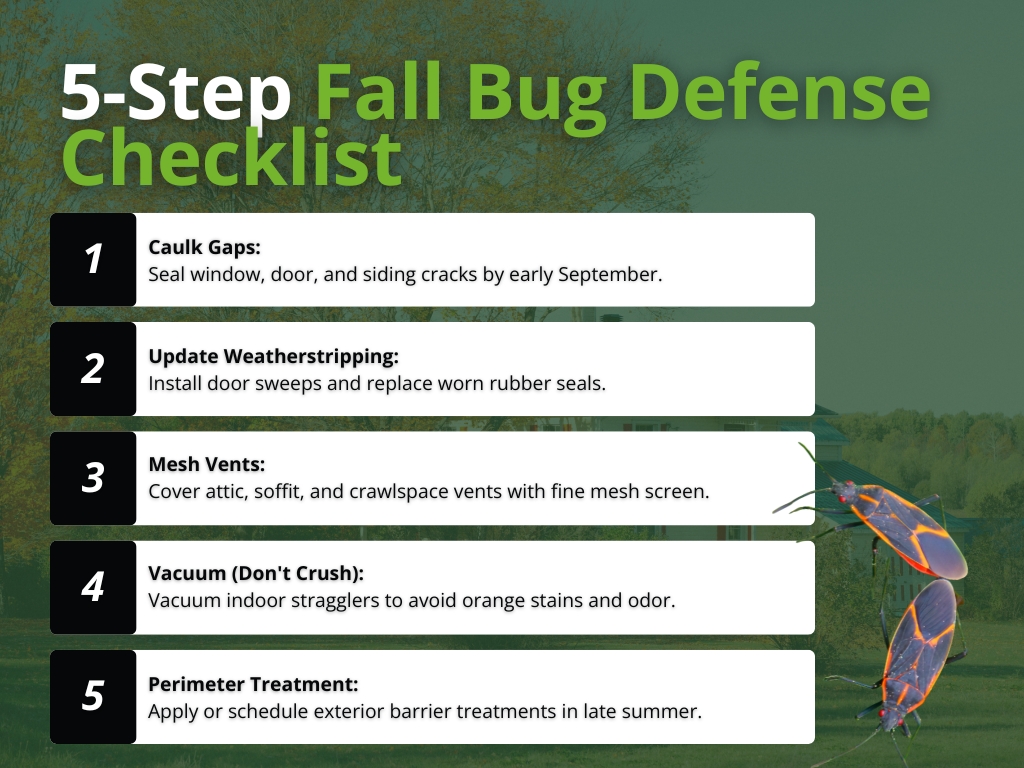
The best way to stop boxelder bugs is to block them before they gather. Here are the steps that work.
Want help finding and closing the gaps? Our exclusion and repair service seals the entry points boxelder bugs use. For more fall prep ideas, see our guide on how to keep bugs out this fall.
Do boxelder bugs bite?
Boxelder bugs rarely bite. Their mouthparts are made for plant juice, not skin. A bug that gets trapped against your arm may pinch in self-defense, leaving a small red bump that fades quickly.
Are boxelder bugs harmful to dogs and cats?
No. Boxelder bugs have no venom and carry no disease. They taste bad, so most pets spit them out and leave them alone.
What do boxelder bugs eat?
Boxelder bugs eat the seeds and plant juices of boxelder, maple, and ash trees. They do not eat food, fabric, or wood inside your home.
Are boxelder bugs invasive?
No. Boxelder bugs are native to North America. The western boxelder bug is a natural part of Pacific Northwest yards. They become a problem only when they move indoors.
Why are boxelder bugs in my house in winter?
They moved into your walls in the fall to overwinter. On warm, sunny winter days, some wake up and crawl toward light, which brings them into your rooms. Our homeowner’s guide to winter pests covers other bugs that do the same.
Are boxelder bugs the same as stink bugs?
No, but they act alike. Both gather on homes in fall and hide in walls for the winter. Stink bugs have a wider shield shape and a stronger smell. Learn more in our post on whether stink bugs are dangerous or just smelly, or read about whether stink bugs can fly.
A few boxelder bugs on the siding are normal in the fall. It is time to call a pro when:
Bigfoot Pest Management is a locally owned, family-run team serving Olympia, Lacey, Tumwater, Yelm, and the rest of the South Sound.
We use Integrated Pest Management (IPM), which means we find and seal how bugs get in first, then treat only where it is needed.
Our pest prevention plans include perimeter treatments timed before the fall rush, and if the pests come back, so do we. We are licensed by the Washington State Department of Agriculture (License #84786).
Boxelder bugs look alarming in big groups, but they are a nuisance, not a danger.
If boxelder bugs have taken over your siding this fall, we can help. Contact BigFoot Pest Management or get a quote for your Olympia pest control needs today.