

How to Get Rid of Silverfish in Your Washington Home



You flip on the bathroom light in the middle of the night, and something small and fast darts across the floor. Or you open a box in the garage and find a handful of tiny, silvery bugs scrambling in every direction.
If that sounds familiar, you are probably dealing with a silverfish infestation.
These nocturnal pests are not as well-known as ants or cockroaches, but they are surprisingly destructive and very well-suited to the damp, mild climate of western Washington. In Olympia, Lacey, Tumwater, and throughout the South Sound, the conditions that attract silverfish are easy to find year-round.
The good news is that you can eliminate silverfish with the right approach and keep them from coming back.
What Are Silverfish
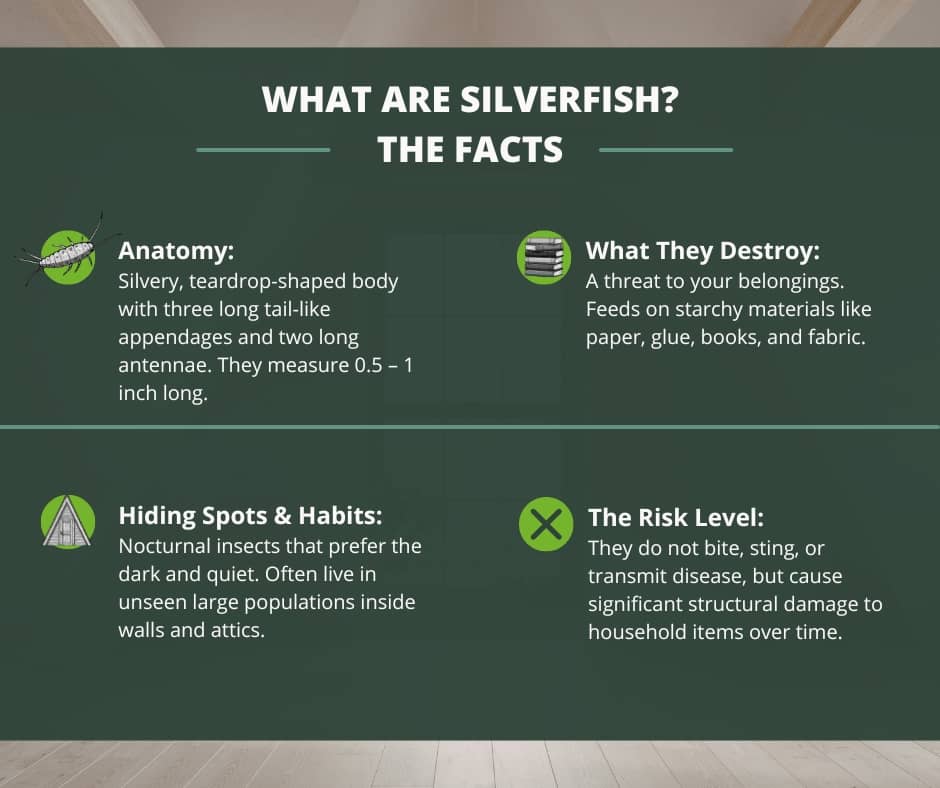
Silverfish are small, wingless insects with silvery scales that rub off easily, a teardrop-shaped body, two long antennae, and three tail-like appendages. They typically measure between half an inch and one inch long.
They are nocturnal and usually hide during the day, coming out at night to feed, which is why many homeowners have a larger population living in their walls or attics than they ever realize.
While silverfish live outdoors in nature, they invade homes when conditions are favorable. They do not bite, sting, or transmit disease.
The threat they pose is to your belongings: they feed on starchy materials, including paper, glue, fabrics, and food crumbs, and the damage they cause to important papers, books, and clothing can be significant over time.
Why Washington Homes Are Especially Vulnerable
Silverfish thrive in humid environments and require humidity above 75% to survive. The Pacific Northwest’s wet climate, mild winters, and heavily shaded properties deliver those conditions year-round.
Unlike many pests that slow down in cold months, silverfish remain active throughout the year in this region.
Homes throughout the South Sound often have crawl spaces that stay dark, damp, and undisturbed, ideal conditions for silverfish to establish hidden populations that gradually spread into living areas.
Attics, basements, laundry rooms, and wall voids near plumbing are other common harborage points. High humidity combined with available food sources like paper and organic debris is what attracts silverfish indoors in the first place.
Signs You Have a Silverfish Problem
|
Sign |
Where to Look |
|---|---|
|
Live silverfish |
Bathtubs, under sinks, near drains, laundry rooms |
|
Feeding damage |
Books, wallpaper, stored clothing, boxes |
|
Yellow stains or scales |
Along baseboards, in closets, near books |
|
Small dark droppings |
In drawers, on shelves, near pantry items |
|
Damaged wallpaper |
Surface etching or irregular peeling |
Feeding damage appears as uneven, scraped-away patches on paper or fabric. Yellow stains come from shed skins left along baseboards and in dark places. Small pepper-like droppings near food storage indicate active feeding.
Damaged wallpaper, particularly near paste lines, is another telltale sign, since wallpaper glue is a preferred food source.
How to Get Rid of Silverfish: Step-by-Step
Effective silverfish control requires addressing both the active population and the conditions that make your home hospitable. Treating one without the other produces only temporary results.
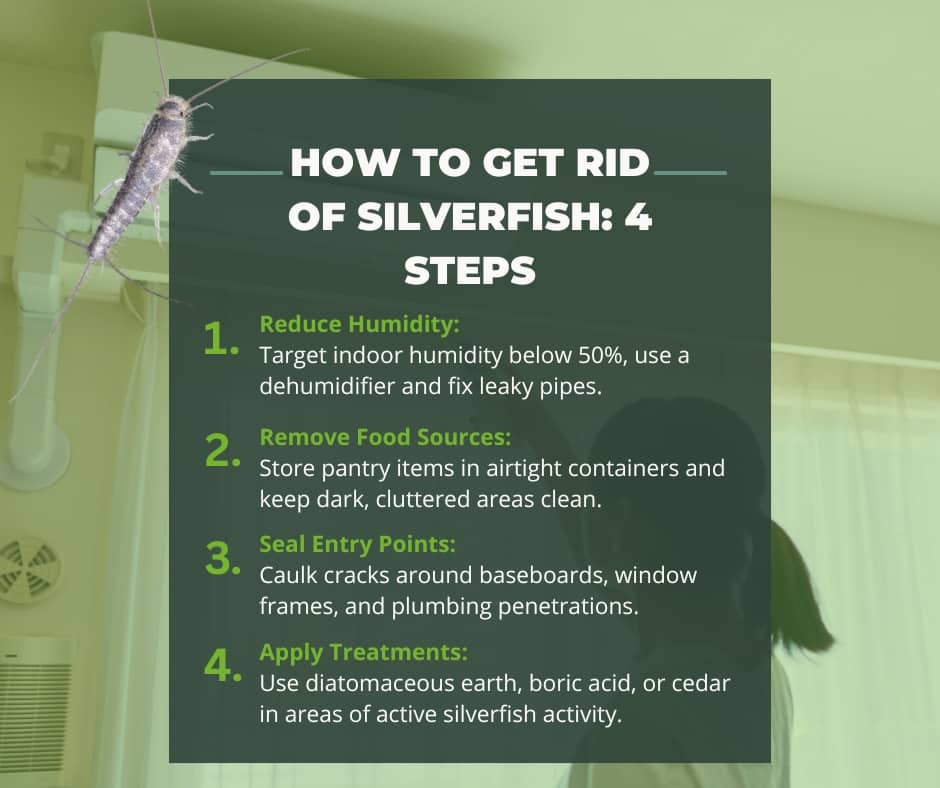
Step 1: Reduce Humidity and Moisture
Because silverfish thrive in high humidity, reducing moisture is the most important long-term step.
- Run a dehumidifier in basements, attics, and other humid areas. Target indoor relative humidity below 50%.
- Repair leaky pipes and check under sinks and near appliances for slow drips or condensation.
- Use bathroom exhaust fans during and after showers to remove moisture.
- Inspect your crawl space vapor barrier. Damage or gaps allow ground moisture to rise into the structure, one of the most common moisture sources in South Sound homes.
Step 2: Remove Food Sources and Clutter
- Store food, including flour, sugar, and pet food, in airtight containers. Silverfish can chew through soft packaging.
- Move paper-based items out of humid areas and store them in sealed plastic bins rather than boxes.
- Vacuum along baseboards, in crevices, and in closets regularly to remove dead skin cells, hair, and organic debris that silverfish feed on.
- Declutter storage spaces. Undisturbed piles of fabric or paper in dark places give these insects everything they need.
Step 3: Seal Cracks and Entry Points
- Silverfish enter through exterior cracks and gaps in the foundation, around pipes, along baseboards, and around window frames.
- Seal cracks around plumbing penetrations and along baseboards with caulk.
- Check weatherstripping on exterior doors, especially those leading to garages or basements.
- Inspect window frames and ensure ground-level screens fit properly.
Caulking cracks around baseboards and windows also blocks entry points for other pests, making this step worth prioritizing.
Step 4: Apply Targeted Treatments
Diatomaceous earth is one of the most effective and natural ways to kill silverfish. This fine powder damages their exoskeleton on contact, causing dehydration. Apply it along baseboards, inside cabinet voids, and in other areas of activity. It is safe around people and pets when used as directed, but it works best in dry conditions.
Boric acid can be used to treat silverfish, but it requires careful placement and may not reach hidden populations. Keep it away from children and pets.
Cedar is an excellent natural repellent; silverfish dislike the smell of cedarwood. Use cedar blocks in closets and storage spaces as a preventive measure.
Cucumbers are also a natural repellent and can be placed in areas of activity as a low-effort deterrent.
Sticky traps along baseboards help monitor silverfish activity and confirm whether treatments are working over time.
What Do Silverfish Eat?
These insects feed on a wide range of starchy materials found in most homes:
- Paper materials: books, magazines, stored documents, cardboard
- Fabrics: cotton, linen, silk, and other natural fibers
- Pantry items: flour, cereals, sugar, and pet food
- Adhesives: wallpaper glue, book bindings, envelope paste
- Structural materials: drywall, paper facing, insulation
- Organic debris: dead skin cells, hair, food crumbs
Store pantry items in airtight glass or plastic containers to eliminate these food sources. Regular cleaning, especially in hidden or dark areas, will remove potential food sources and discourage silverfish from nesting.
Silverfish vs. Similar Pests
- Firebrats look nearly identical but prefer hot, dry areas near furnaces and water heaters rather than humid environments. Silverfish control approaches work for both.
- Earwigs share the same preference for damp, dark spaces, but are easy to distinguish by their pincer-like rear appendages.
- Springtails are tiny jumping insects often found near drains. They are much smaller than silverfish and almost always indicate a moisture problem; fixing the dampness typically eliminates them.
- Carpet beetles cause similar fabric and paper damage. Their bristly larvae look nothing like silverfish, so checking for the insect itself or its shed skins helps clarify which pest you are dealing with.
Related Questions
Are silverfish the only pest that damages paper and fabric?
No. Carpet beetles, clothes moths, and rodents can all cause similar damage to stored belongings. If you are finding damage but not seeing silverfish, it is worth investigating other possibilities before assuming you have identified the right pest.
Can a moisture problem in my home attract multiple pests at once?
Yes. High humidity and water damage do not just attract silverfish; they are also associated with earwigs, springtails, cockroaches, mold mites, and even rodents seeking water sources. Addressing moisture is one of the most effective things a homeowner can do to reduce pest pressure across the board.
Do silverfish indicate a bigger pest problem?
Not always, but their presence is a reliable signal that humidity levels are elevated and that there are entry points in the structure that other pests could use as well. House centipedes, which are common in South Sound crawl spaces, often appear in homes with active silverfish populations because they prey on them.
When is a pest problem too big to handle without professional help?
A good rule of thumb is that if you are finding pests in multiple areas of the home, seeing them during daylight hours, or noticing structural or property damage, it is time to bring in a professional. Many pest issues, silverfish included, are symptoms of underlying conditions like moisture intrusion or gaps in the building envelope that require a more comprehensive assessment.
When to Call a Professional
DIY steps work well for minor silverfish activity, but professional pest control is the better path if you are finding insects in multiple rooms, treatments have not reduced activity, you have visible damage to belongings or structural materials, or the infestation appears to be coming from a crawl space or wall voids.
Regular inspections by pest control professionals can help identify and address silverfish infestations before they escalate. Professional pest control can provide long-term solutions by implementing comprehensive treatment plans, especially important in western Washington, where humidity creates favorable conditions year-round.
Conclusion
Getting rid of silverfish in a Washington home comes down to addressing humidity, removing what attracts them, sealing exterior cracks and entry points, and applying targeted treatments where they are actually active. When those steps work together, they work well. When one piece is missing, the insects tend to return.
If you are dealing with a silverfish infestation and want help getting to the root of the problem, Bigfoot Pest Management is here. We are locally owned, we understand the South Sound climate, and we focus on solutions that last. Call us at or reach out online to schedule your inspection.

How to Get Rid of Silverfish in Your Washington Home
You flip on the bathroom light in the middle of the night, and something small and fast darts across the floor. Or you open a…

Preparing for Spiders in Washington State This Spring and Summer
Spring in Washington state means longer days, warmer nights, and more bugs. And where bugs go, spiders follow. If you live in the Olympia area,…